.svg)
.svg)

.svg)


Spray Foam vs. Fiberglass: The Long-Term ROI for Your Property
Choosing between spray foam vs fiberglass is one of the most significant financial decisions a property owner in the South can make. While traditional insulation has been the industry standard for decades, modern homeowners and builders are increasingly looking at the long-term Return on Investment (ROI) rather than just the initial price tag.
At Spray Foam Worx, we believe that understanding the structural and thermal performance of spray foam vs fiberglass over a 10 to 20-year period reveals the true cost of each material. Here is a deep dive into why the choice you make today affects your wallet for years to come.
Settling Issues and Structural Longevity: Spray Foam vs. Fiberglass
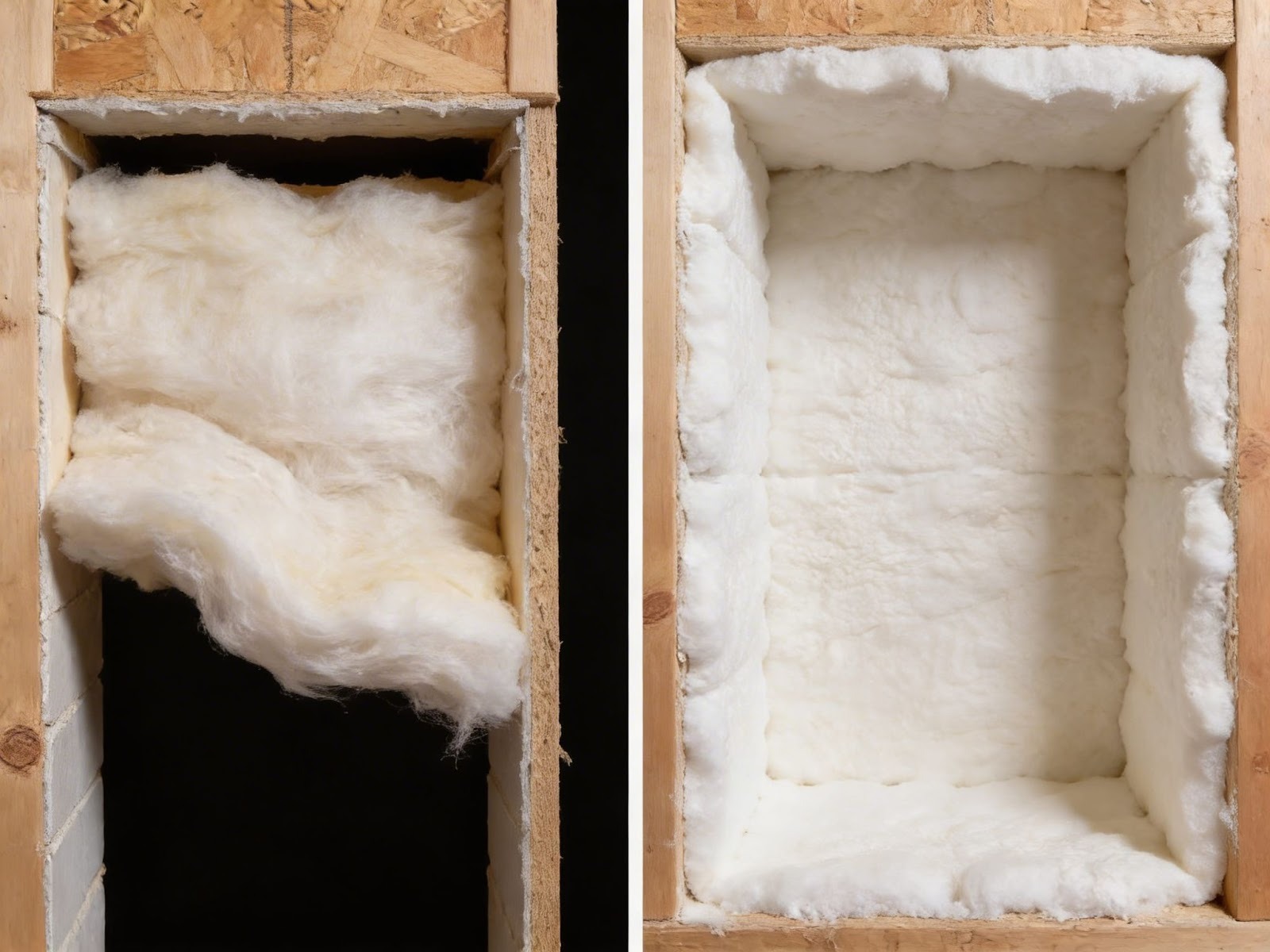
One of the most overlooked factors in the spray foam vs fiberglass debate is physical stability. Traditional fiberglass batts or blown-in cellulose are subject to the forces of gravity and time. Over just a few years, these materials tend to settle, sag, or compress, which drastically reduces their effectiveness.
The Problem with Fiberglass Slumping
Fiberglass relies on trapped air pockets within its glass fibers to provide insulation. However, in the high-humidity environments of Tennessee and Louisiana, moisture can weigh these fibers down. When fiberglass slumps, it leaves the top of your wall cavities completely uninsulated, creating "cold spots" that lead to higher energy bills and potential mold growth.
Why Spray Foam Does Not Settle
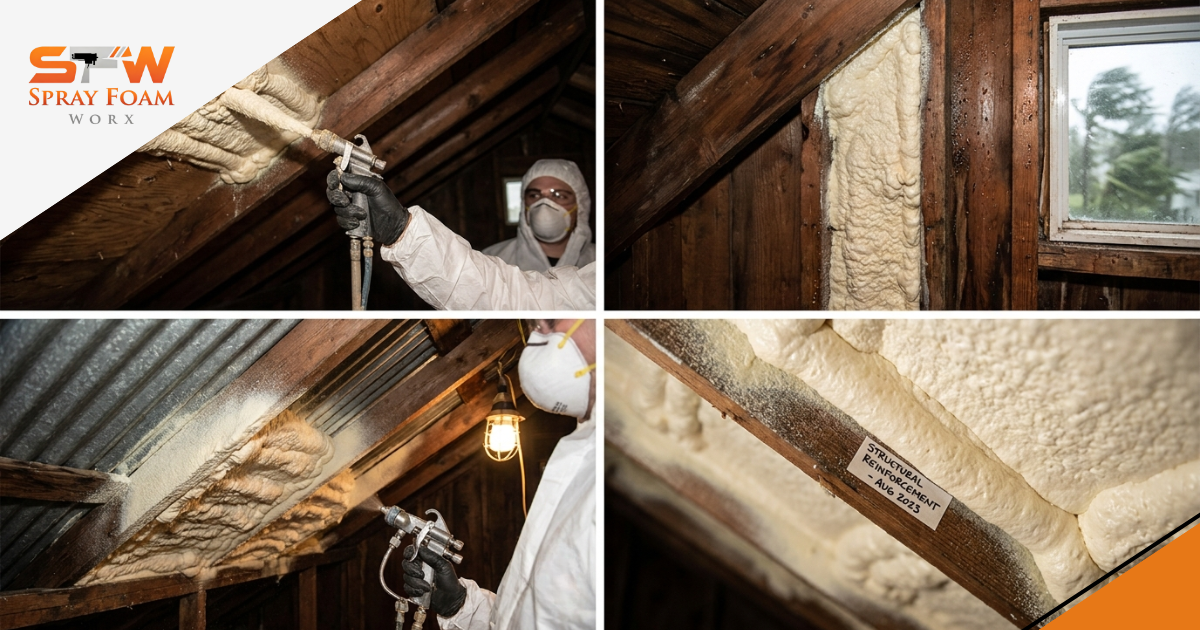
In contrast, when comparing spray foam vs fiberglass, spray foam offers a permanent structural bond. Whether you choose closed cell spray foam insulation for its rigidity or open cell spray foam insulation for its expansive reach, the product adheres to the substrate. It does not sag, slip, or settle, ensuring that the top of your walls is just as insulated in year 20 as it was on day one.
Air Gaps and Thermal Bridging in Spray Foam vs. Fiberglass
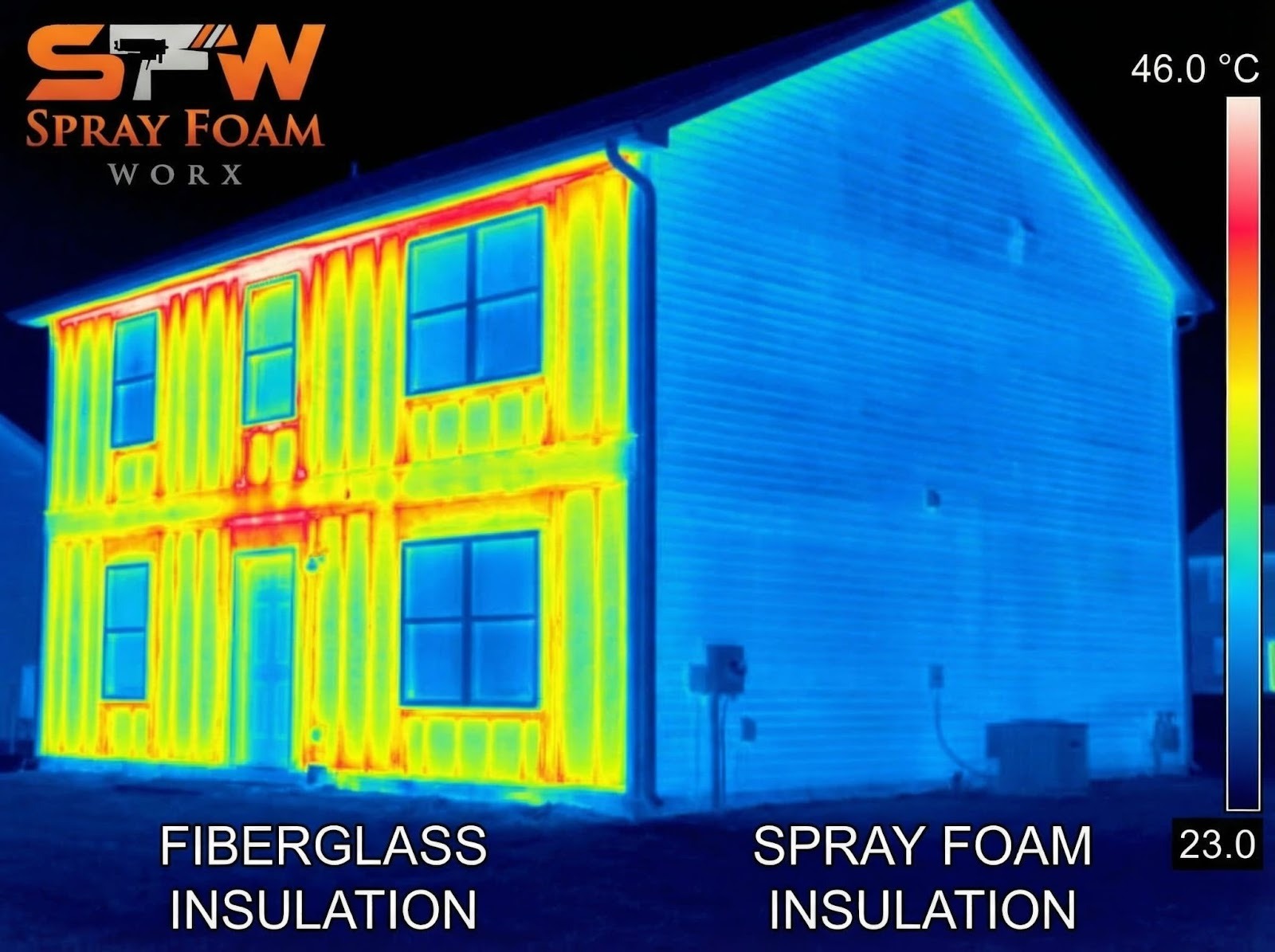
An insulation’s R-value is only as good as its seal. When evaluating spray foam vs fiberglass, the ability to stop air movement is where the two materials diverge most sharply. Fiberglass is a "filter," not an "air barrier," meaning air can pass through it relatively easily.
The Hidden Cost of Air Gaps
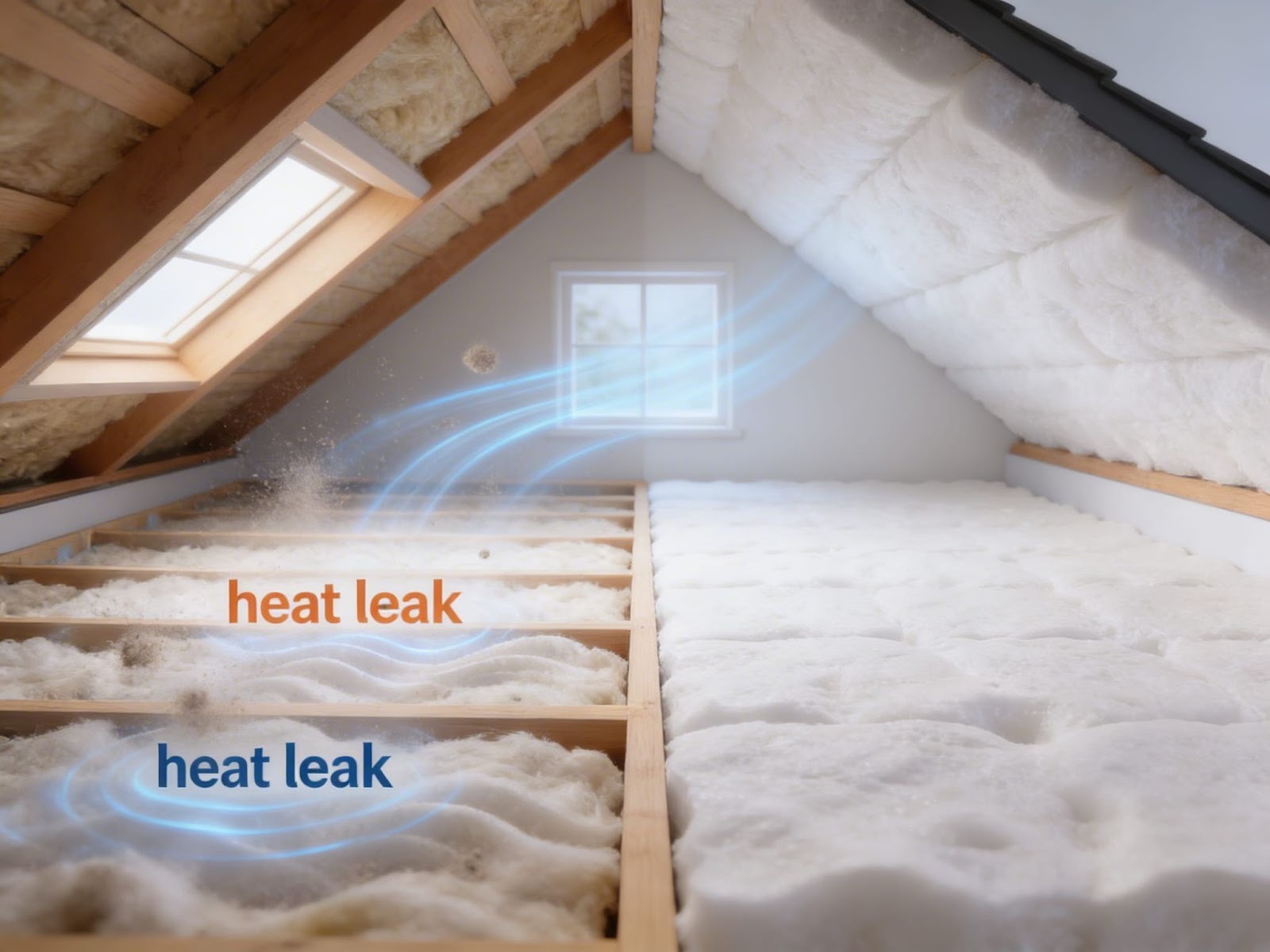
- Convective Loops: Air can circulate within fiberglass, carrying heat away from your living space.
- Thermal Bridging: Fiberglass often leaves gaps around electrical outlets, plumbing, and irregular studs.
- Moisture Intrusion: Air gaps allow humid Southern air to reach cool surfaces, leading to hidden condensation.
- Energy Waste: Even the highest R-value fiberglass loses efficiency if air is leaking through the gaps in the installation.
The Airtight Advantage of Spray Foam
The winner in the spray foam vs fiberglass air-sealing battle is clearly spray foam. Because it expands into every nook and cranny, it creates a custom-fit airtight seal. This eliminates the need for separate house wraps or extra caulking, effectively turning your building envelope into a sealed cooler that keeps conditioned air where it belongs.
R-Value Retention Over 10 Years: Spray Foam vs. Fiberglass
When you buy insulation, you are buying a specific R-value (thermal resistance). However, the "labeled R-value" and the "installed R-value" are often different. Over a 10-year period, the spray foam vs fiberglass performance gap becomes a major financial factor.
Degradation of Fiberglass R-Value
Fiberglass is highly sensitive to installation quality and environmental factors. If it gets damp from humidity or is compressed by a contractor, its R-value can drop by as much as 30% to 50%. Furthermore, as it collects dust and debris over a decade, its ability to trap air effectively diminishes, leading to a steady increase in your monthly utility costs.
Consistent Performance of Spray Foam
When you invest in spray foam vs fiberglass, you are paying for consistency. Spray foam maintains its R-value for the life of the structure. It is not affected by moisture, it does not trap dust, and it does not lose its shape. This retention of thermal power means your HVAC system doesn't have to work harder every year to maintain the same temperature. For those dealing with damaged older materials, we offer vacuum insulation removal to clear the way for a permanent foam solution.
Reach Out to Spray Foam Worx for a Long-Term ROI Analysis
While the initial cost of fiberglass is lower, the long-term savings of spray foam make it the superior financial choice for most property owners. When you calculate the lower energy bills, reduced HVAC wear-and-tear, and lack of replacement costs, the spray foam vs fiberglass debate usually ends with foam on top.
📞 Call Spray Foam Worx Today +1-318-235-8116
FAQ
Q1: When should you not use spray foam?
Spray foam should not be used in homes with active, unvented combustion appliances or on historical properties where a reversible insulation method is required. It is also important to avoid spraying over electrical boxes or wiring that may need regular maintenance access, as the foam is permanent once cured.
Q2: Why are people removing spray foam?
Most removals occur because of poor initial installation by uncertified contractors, which can lead to lingering odors or incomplete curing. Some homeowners also choose vacuum insulation removal when upgrading old, damaged foam to a higher-quality closed-cell product for better moisture protection in Southern climates.
Q3: What is the best and safest home insulation?
When professionally installed, spray foam is considered one of the safest and most effective options because it provides a total air seal that keeps out allergens and pollutants. It is chemically inert once cured, meaning it won't release fibers into your air like fiberglass or harbor pests and mold like traditional organic materials.
Q4: Is spray foam made of fiberglass?
No, spray foam is a polyurethane-based material created by a chemical reaction between two liquid components, whereas fiberglass is made of extremely fine glass fibers. They operate on entirely different principles; spray foam creates a solid air barrier, while fiberglass acts more like a filter that slows down heat transfer.
Q5: How long will spray foam last?
One of the greatest benefits of spray foam is that it is designed to last the entire lifespan of the building, often 80 to 100 years. Unlike fiberglass, it does not sag, settle, or lose its thermal resistance (R-value) over time, making it a permanent "one-and-done" investment for your property.
Q6: Can mold grow behind spray foam insulation?
Mold requires moisture, oxygen, and a food source to grow; because closed-cell spray foam creates an airtight seal directly against the substrate, it eliminates the space where moisture typically condenses. As long as the building has a proper roof and no active leaks, spray foam is actually one of the best ways to prevent mold growth in humid regions.