.svg)
.svg)

.svg)




Humidity Control Insulation in Louisiana: How Closed-Cell Foam Stops Moisture
As summer rolls into the Gulf South, air conditioning units across the state spark to life to combat the oppressive heat, which is why investing in premium humidity control insulation is so critical for Southern homes. Yet, any local homeowner knows that the real battle isn't just against high temperatures—it is against the relentless, heavy moisture in the air.
When unmanaged exterior humidity migrates into a house, it causes sticky indoor air, structural strain, and a breeding ground for mold. Traditional building materials often fail under these heavy environmental conditions.
Implementing advanced humidity control insulation is the most reliable strategy to shield your home’s structure, balance indoor air quality, and keep summer dampness exactly where it belongs: outside.
The Invisible Threat: Vapor Diffusion in Walls and Structural Moisture
Moisture doesn’t just enter a home through open windows or doors; it moves through solid building materials. Through a natural process known as vapor diffusion, moisture in the air automatically travels from areas of high concentration (the humid Louisiana outdoors) to areas of lower concentration (your dry, air-conditioned indoor spaces).
As water vapor forces its way through your home's exterior walls, siding, and subfloors, it seeks out any path it can find. If your wall cavities are empty or filled with porous, traditional insulation, this airborne water vapor passes through completely unhindered, raising the humidity levels inside your living spaces and forcing your air conditioner to run constantly just to dry out the air.
Understanding Dew Points in the Gulf South Climate
To understand how moisture damages a house, it helps to look at the concept of a dew point. The dew point is the specific temperature at which air becomes completely saturated with water vapor, causing that gas to turn back into liquid water droplets.
Inside a typical Louisiana home, your air conditioning system keeps interior drywall and wooden framing members nice and cool. However, when hot, humid outdoor air migrates through the walls and comes into contact with these cold interior surfaces, it instantly hits its dew point.
This hidden condensation quickly dampens wooden wall studs, floor joists, and drywall backing. Over time, this recurring cycle of internal sweating leads to hidden wood rot, structural degradation, and severe indoor air quality issues. Proper humidity control insulation prevents this disaster by ensuring that humid air can never reach those cold, air-conditioned structural surfaces.
Why Standard Insulation Fails in Louisiana's Humid Climate
Traditional fiberglass batts and blown-in cellulose possess an open, loose composition. They act like a net rather than a solid wall, allowing vapor to pass through easily. When moisture condenses inside fiberglass, the material stays damp, loses its insulating value, and begins to sag.
To explore how alternative applications hold up in different areas of the home, you can read more about blow-in traditional fiberglass insulation to see where traditional systems fall short.
Reasons Standard Insulation Fails and Closed-Cell Foam Excels for Humidity Control Insulation
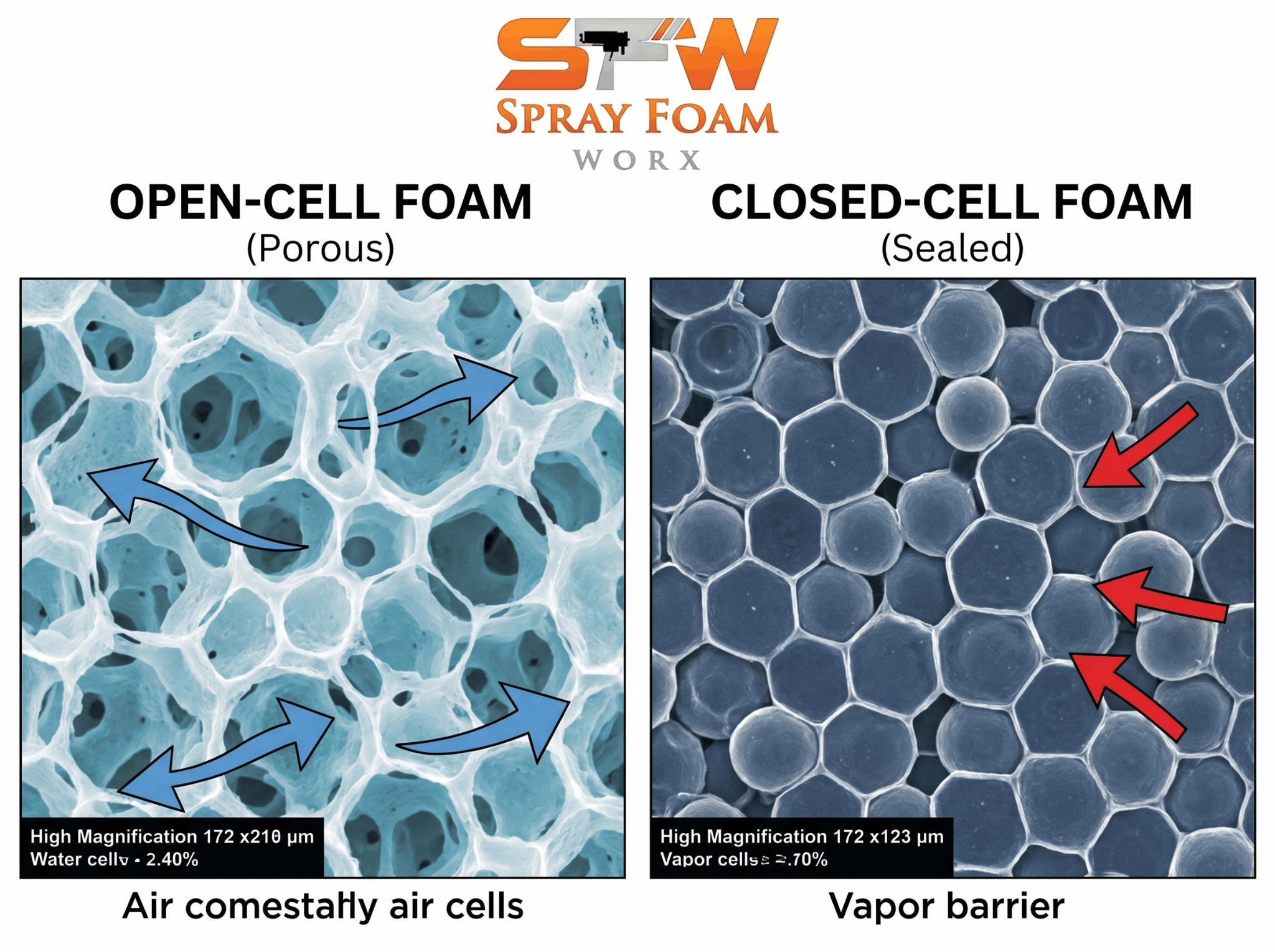
When selecting spray polyurethane foam to combat intense moisture, it is important to know the structural differences between open-cell and closed-cell formulations. Both products are exceptional air sealers, but they perform very differently when confronted with extreme vapor pressure.
Open-Cell Spray Foam
Open-cell foam is lightweight, flexible, and expands rapidly, making it fantastic for filling deep structural cavities and dampening outdoor noise. While it stops airflow completely, its microscopic cells remain open. This means that in areas with extreme moisture imbalances, water vapor can slowly diffuse through it over time. To learn more about its specific residential uses, check out the core benefits of open-cell spray foam insulation.
Closed-Cell Spray Foam: The True Moisture Wall
For maximum moisture management in high-humidity zones, closed-cell foam is the definitive choice. This dense material is composed of completely compacted, closed cells filled with a specialized gas that resists heat transfer.
- Built-In Vapor Retarder: Closed-cell foam is completely impermeable to water vapor, stopping vapor diffusion dead in its tracks.
- Waterproof Boundaries: It does not absorb, hold, or transfer liquid water, making it perfect for damp crawl spaces and roof lines.
- Dense Structural Reinforcement: It cures into a hard, rigid state that physically glues framing components together, increasing structural strength.
To see why this specific material is highly recommended for coastal or high-humidity zones, read more about how closed-cell spray foam insulation protects vulnerable building assemblies.
Achieving Mold Prevention in Humid Crawl Spaces and Attics
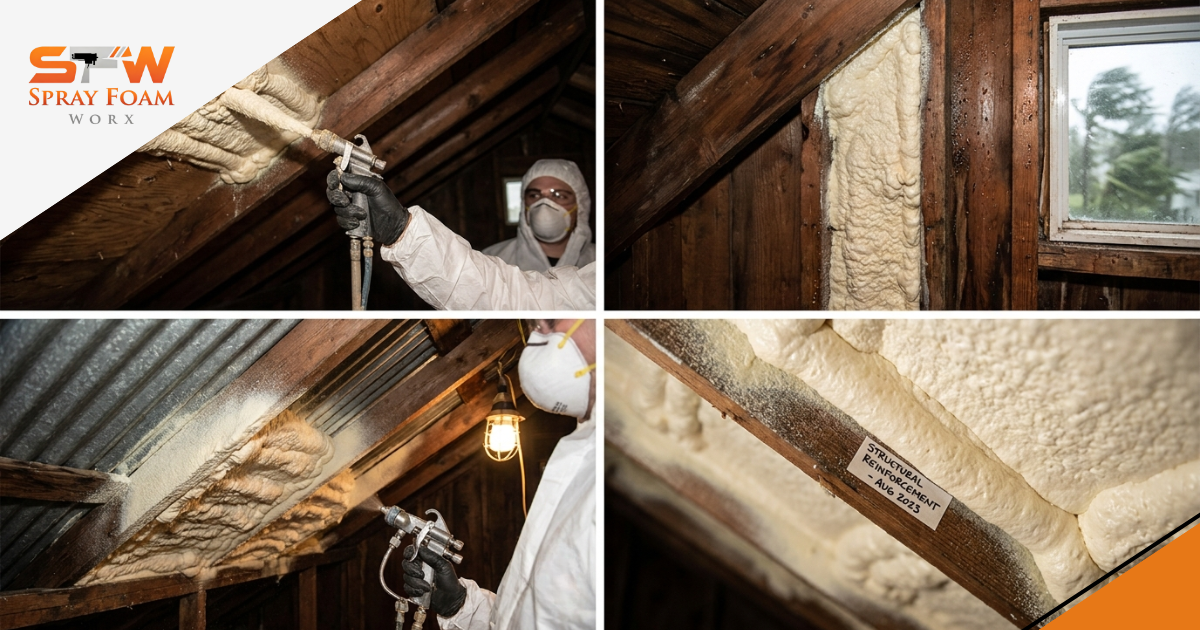
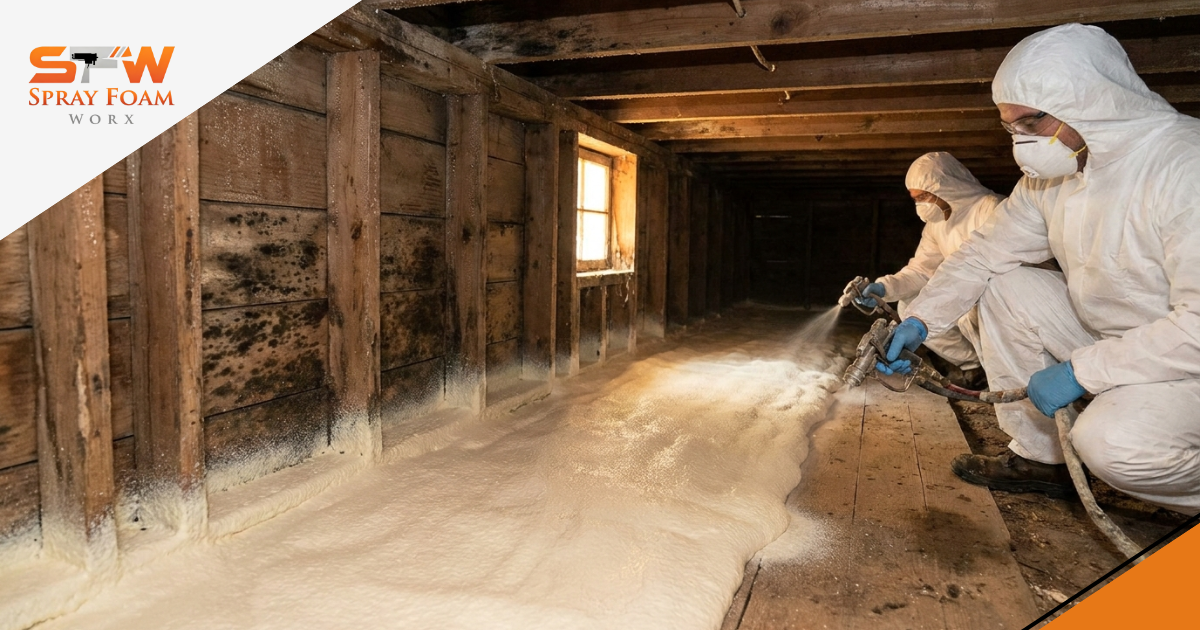
The ultimate goal of managing vapor diffusion and dew points is structural mold prevention. Mold spores are present everywhere in nature, but they require a consistent source of moisture to colonize and grow on building materials.
By applying premium closed-cell spray foam to your home’s outer boundaries, you eliminate the dark, damp microclimates where mold thrives. It seals off all the minor cracks, rim joists, and plumbing gaps that allow external humidity to leak into your home.
Benefits of Comprehensive Moisture Exclusion
- Pristine Indoor Air: Stopping mold growth under your floors or in your attic means your family breathes cleaner air completely free of airborne fungal spores.
- Preserved Wood Integrity: Subfloors and roof rafters stay bone-dry all year long, completely eliminating the threat of premature wood rot.
- Enhanced Odor Control: Eliminating high humidity puts an end to that musty, stale smell often associated with southern homes during the summer months.
Relieving the Strain on Your Home's Climate Control
When your home lacks proper humidity control insulation, your air conditioning system has to perform two demanding tasks at once: lowering the air temperature and extracting gallons of airborne water vapor.
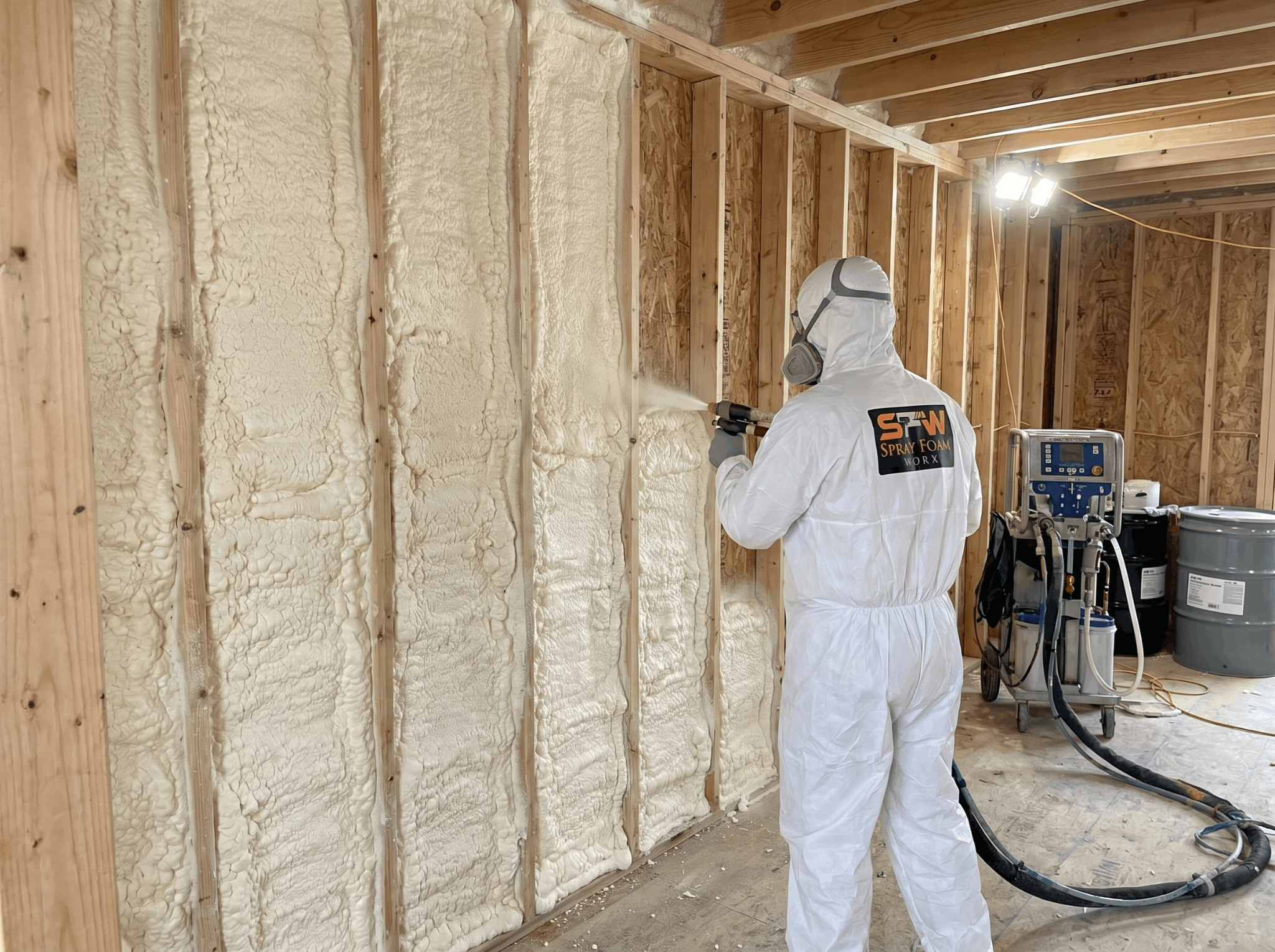
This heavy moisture load forces your compressor to run much longer, less efficient cycles. Once closed-cell spray foam is installed, the outdoor humidity is locked outside. Your AC system can cool your living spaces easily and quickly, resulting in lower power bills and extended equipment life. To understand how sealing your home's envelope alters your entire energy ecosystem, explore the science behind why spray foam stands out as a premier upgrade.
Strengthening Louisiana Homes From Coast to Capital
At Spray Foam Worx, we understand how drastically the climate impacts your building envelope depending on where you live. Whether you are dealing with subfloor dampness near Lafayette, dense river humidity around Baton Rouge, coastal moisture in New Orleans, or the intense seasonal heat shifts up in Shreveport, our targeted insulation applications are tailored to withstand the unique environmental pressures of your specific parish.
Preparing for Your Installation
If your home’s existing wall cavities or subfloors contain old, wet insulation that has already been ruined by years of high humidity, those materials must be removed. Spray Foam Worx utilizes specialized high-powered extraction vacuums to clear out damp, contaminated insulation, ensuring a clean, dry surface for the new closed-cell foam. Utilizing a professional vacuum insulation removal service ensures your project starts with a healthy, sterile foundation.
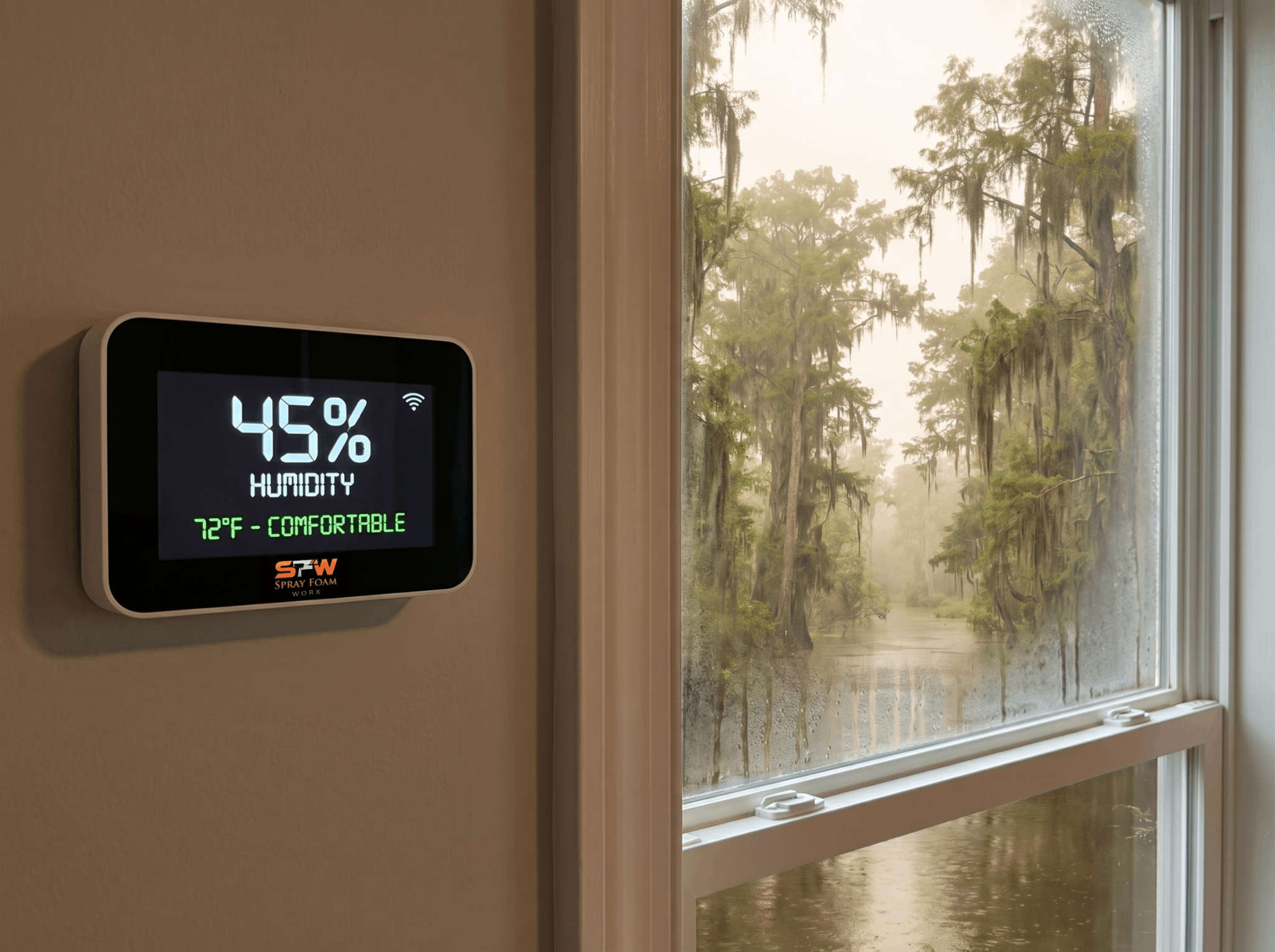
Ready to Lock Out Louisiana Humidity?
Calculate Your Savings Instantly
Planning your home improvement budget shouldn't be guesswork. Use our interactive tool to estimate your project requirements and potential utility savings:
👉 Try the Spray Foam Worx Calculator & Quote Generator

FAQ
Can insulation reduce humidity?
Yes, high-performance insulation can dramatically reduce indoor humidity by establishing a tight physical envelope around your property. When Spray Foam Worx installs airtight foam, it stops hot, humid outdoor air from constantly leaking inside through structural gaps. This allows your home's air conditioner to easily extract existing indoor moisture and maintain a dry climate rather than being overwhelmed by a continuous influx of outdoor vapor.
What is a good humidity level for COPD?
For individuals managing Chronic Obstructive Pulmonary Disease (COPD), maintaining an indoor relative humidity level between 35% and 50% is generally considered optimal. Air that is excessively dry can irritate sensitive airways, while air that is too humid promotes mold growth and dust mites, which trigger severe respiratory flare-ups. Utilizing high-quality humidity control insulation is a crucial step in stabilizing your home's indoor environment within this healthy target range.
What is the best insulation for high humidity?
Closed-cell spray foam is widely recognized as the absolute best material for high-humidity environments like the Louisiana Gulf Coast. Unlike fiberglass or cellulose, which absorb airborne moisture and sag over time, closed-cell foam is completely dense and water-impermeable. It acts as an advanced thermal barrier and a built-in vapor retarder simultaneously, stopping vapor diffusion completely and ensuring that humid air cannot condense against cool structural walls.
What is the best humidity for eczema?
The ideal indoor humidity level for individuals suffering from eczema is usually right around 40% to 50%. High humidity triggers excessive sweating, which irritates skin folds and leads to painful eczema flare-ups. On the flip side, dry air strips natural moisture from the skin barrier. Sealing your house with premium spray foam helps your HVAC system lock in a consistent, perfectly balanced relative humidity level all year long.
What causes 80% humidity in a house?
An indoor reading of 80% humidity is typically caused by exterior air infiltration paired with an unsealed crawl space or uninsulated attic. In Louisiana, heavy moisture evaporates out of the soil or leaks through wall cavities, migrating directly into your living spaces. When a home lacks proper humidity control insulation, the air conditioner cannot keep pace with this constant influx of water vapor, resulting in a dangerously damp indoor environment.