.svg)
.svg)

.svg)


Is Spray Foam Safe? The Facts About Professional Specs
When homeowners consider upgrading their insulation, the first question they often ask is: "Is spray foam safe?" Understanding the safety standards of high-performance insulation is essential for any property owner in Louisiana or Mississippi. While the materials used are chemically advanced, a professional installation ensures that your home remains a healthy, energy-efficient environment from day one.
At Spray Foam Worx, we prioritize spray foam safety by following strict industry protocols to protect both our crew and your family. Here is everything you need to know about VOCs, the curing process, and why professional standards matter.
The Science of VOCs and Spray Foam Safety
Volatile Organic Compounds (VOCs) are gases emitted from certain solids or liquids. In the context of spray foam safety, VOCs are primarily present during the actual application and the short window immediately following the install. Many common household items like paint, new carpet, and even cleaning supplies release VOCs, but the concentrated nature of an insulation install requires specialized handling.
How We Manage Off-Gassing
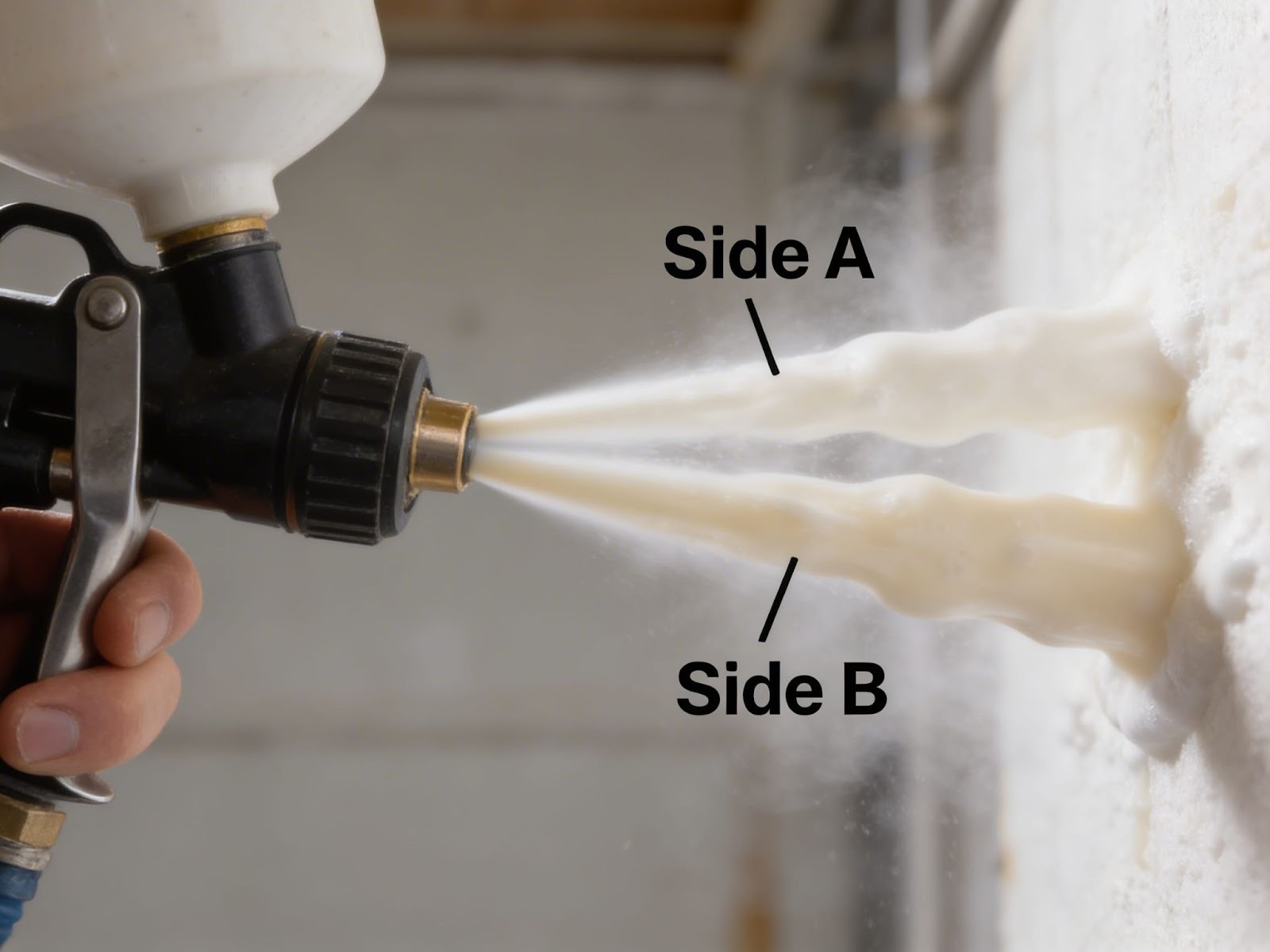
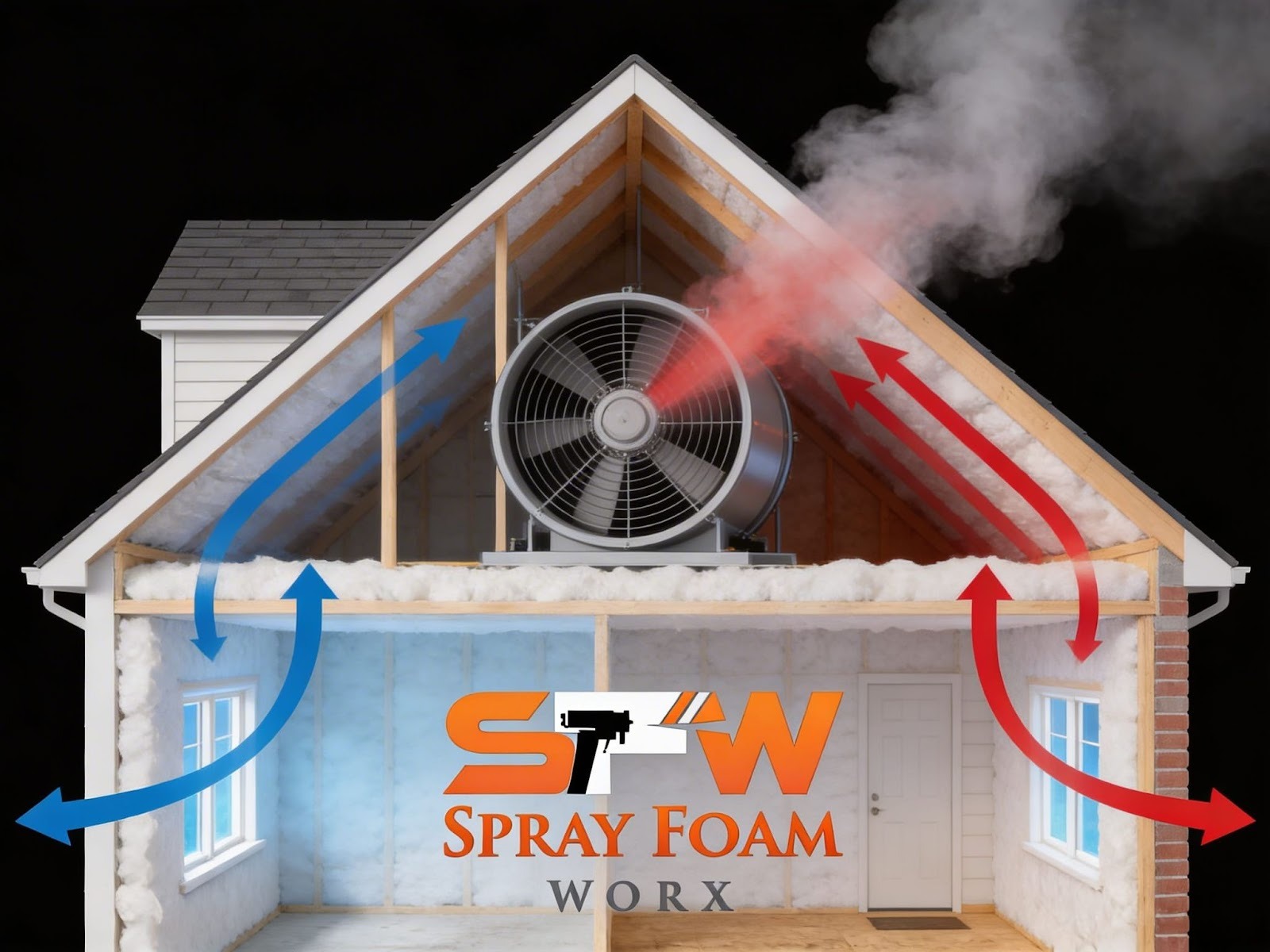
The chemical reaction that occurs during installation involves mixing two components, often called Side A and Side B. When these components meet at the tip of the spray gun, they undergo a rapid exothermic reaction. Part of a rigorous spray foam safety plan includes high-capacity mechanical ventilation to pull these gases out of your home. By the time the foam has reached its stable state, it is an inert plastic that no longer poses a respiratory risk.
Achieving Chemical Stability
Once the reaction is complete, the foam is considered "inert." This means it is no longer chemically active and will not continue to release harmful levels of gases into your living space. This transition from a reactive liquid to a stable solid is the foundation of long-term spray foam safety. Before the new foam is applied, we often recommend vacuum insulation removal to ensure the area is free of old dust and allergens that could interfere with air quality.
The Critical Role of the Curing Process
The "curing" time is the most critical window for spray foam safety. This is the period when the liquid chemicals transform into a solid state. If a building is re-occupied too early, residents might be exposed to lingering vapors.
Adhering to the 24-Hour Re-entry Rule
For most residential projects, we enforce a strict 24-hour re-entry period. This is a standard spray foam safety precaution to ensure all vapors have cleared and the foam is 100% stable. During this time, the house should be vacated by people and pets. We also monitor ambient temperature and humidity, as these environmental factors can influence how quickly the chemicals react and settle.
Pre-Installation Cleaning for Air Quality
- Inspection: We check for existing moisture or mold that could be "trapped" by new foam.
- Surface Prep: We ensure the substrate is dry to allow closed cell spray foam insulation to bond correctly and safely.
- Sealing: We identify bypasses where air could move from the attic into the living space during the spray.
- Ventilation Setup: We install high-powered fans to create negative pressure.
- Post-Spray Review: We verify that the foam has cured uniformly without any "pockets" of unreacted material.
Professional Equipment and Spray Foam Safety Standards
Why is a DIY kit risky? Because spray foam safety depends entirely on the precision of the equipment and the expertise of the installer. Professional-grade reactors allow us to control the temperature and pressure of the chemicals to within a few degrees of the manufacturer's specification.
Advanced Safety Gear for Technicians
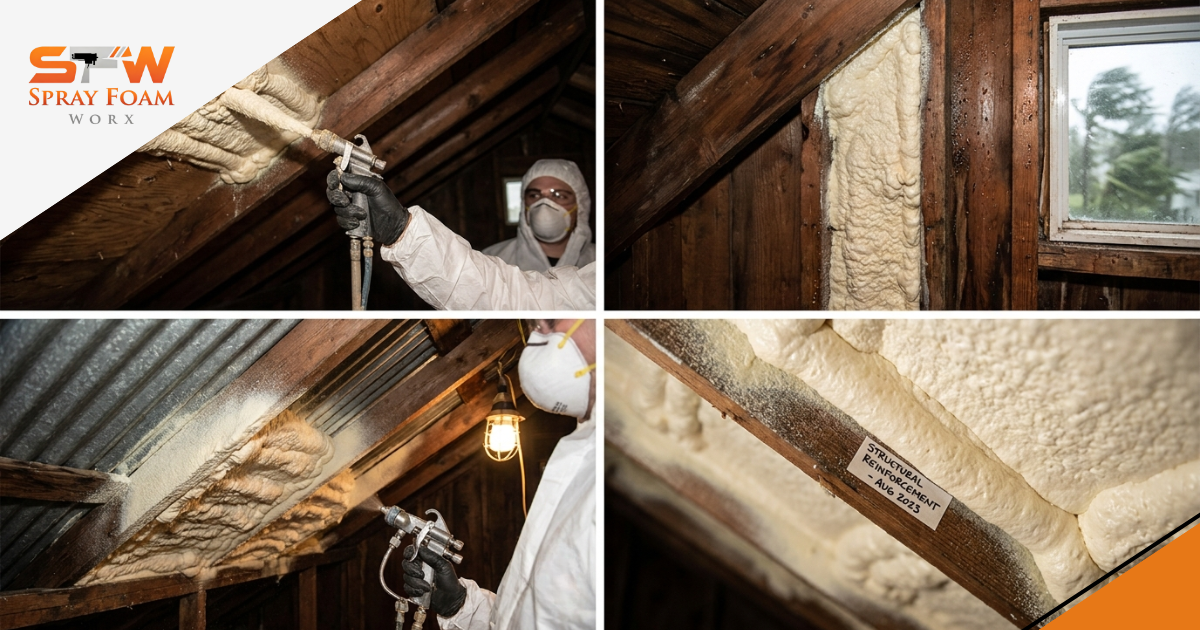
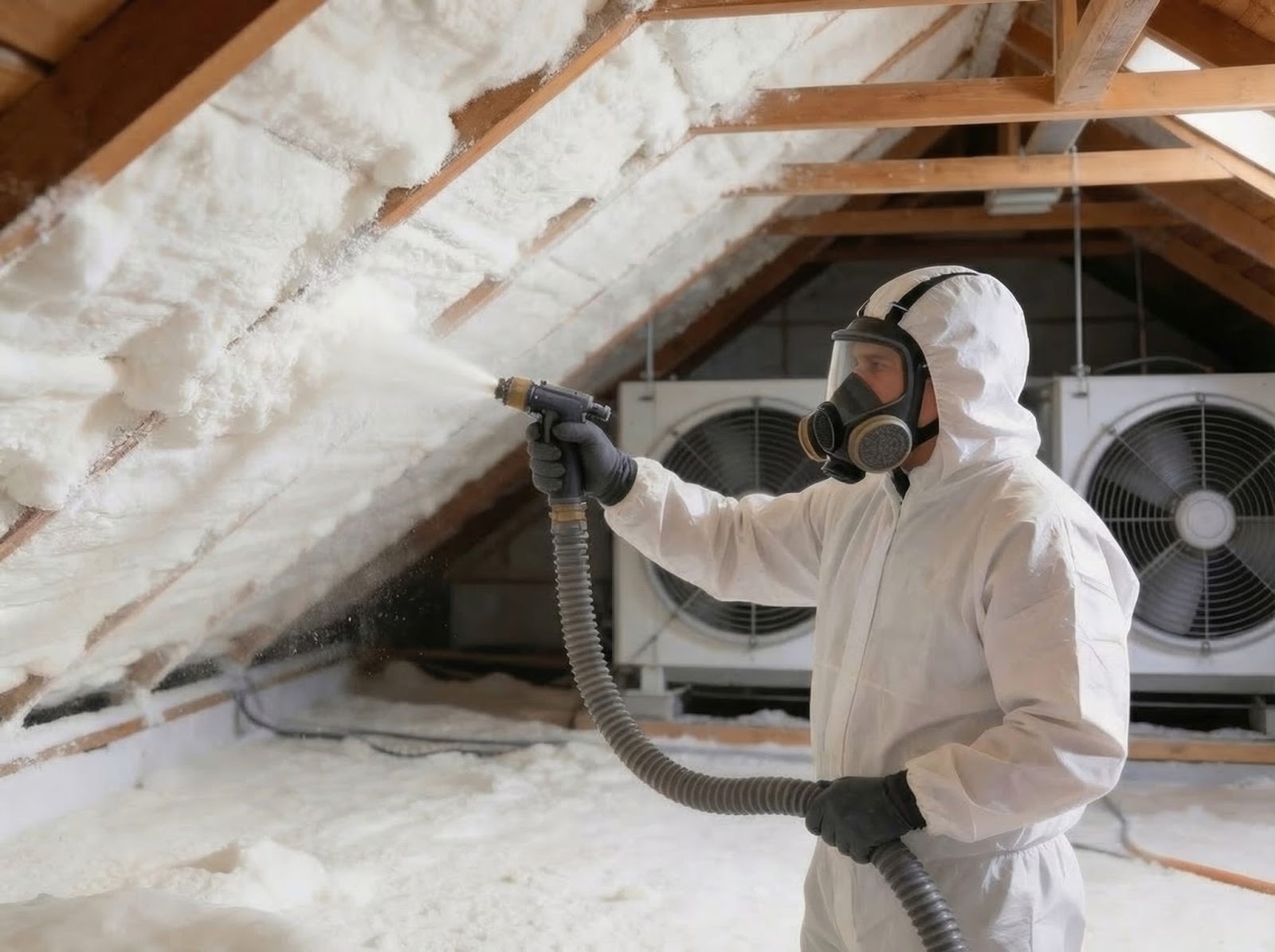
Our installers wear full-face respirators connected to a fresh air pump, which is a non-negotiable part of our spray foam safety protocol. This gear ensures that the person closest to the chemical reaction is never breathing in the concentrated vapors. Furthermore, we wear full-body protective suits to prevent skin sensitization, which can occur if the liquid components come into contact with the skin before they are cured.
Selecting the Right Material for Your Environment
Choosing the right product is also a matter of safety. For example, using open cell spray foam insulation in an attic provides incredible soundproofing and air sealing while remaining vapor permeable. We only use industry-certified, low-VOC brands to ensure the highest levels of spray foam safety for your family.
Preparing Your Home for a Safe Installation
Before we arrive, there are a few steps you can take to assist in the spray foam safety process. Clearing the area of any personal belongings is the first step, as it prevents overspray from damaging your items and gives our team the room they need to move safely.
The Homeowner's Safety Checklist
- HVAC Shutdown: We temporarily shut down your air handling system to prevent the spread of dust or vapors through your ductwork during the application.
- Pet and Family Relocation: Plan for pets and family members to stay elsewhere for the duration of the install and the 24-hour cure window.
- Access Management: Ensure all gates and attic hatches are accessible so our team can move in and out quickly to monitor the equipment.
Reach Out to Spray Foam Worx for a Safe, Professional Install
Your health and safety are our top priorities. By following the highest spray foam safety standards in the industry, we provide an insulation solution that lowers your bills and improves your indoor air quality for a lifetime.
📞 Call Spray Foam Worx Today +1-318-235-8116
FAQ
Q1: Are the fumes from spray foam toxic?
During the application process, the raw chemicals (Side A and Side B) release VOCs that are hazardous if inhaled directly by the unprotected. However, once the foam has undergone its chemical reaction and fully cured, it becomes an inert, non-toxic solid that is completely safe for the home environment and its residents.
Q2: How long after spray foam is it safe?
For standard professional applications, the industry safety standard is 24 hours for re-entry. This "re-entry" period allows for the foam to fully cure and for mechanical ventilation to clear any lingering odors or vapors from the air, ensuring a clean and breathable atmosphere.
Q3: Do you need to wear a mask when using spray foam?
Yes, but a simple dust mask is insufficient for the concentrated chemical gases present during application. Professionals must wear full-face respirators with a supplied fresh-air source during installation to ensure spray foam safety; homeowners should remain clear of the area until the air is cleared.
Q4: What are the negatives of spray foam?
The primary negatives are the higher upfront cost compared to fiberglass and the requirement for professional installation to avoid chemical imbalances. Because it is a permanent material, it also requires specialized equipment for removal if you ever decide to renovate or re-wire the structure later.
Q5: Is spray foam bad for your lungs?
It is only a respiratory hazard if inhaled in its liquid or vapor state during the high-pressure application process. Once the product has cured (usually after 24 hours), it is no longer a hazard; in fact, it often helps people with respiratory issues by sealing out dust, pollen, and outdoor pollutants.