
.svg)
.svg)

.svg)


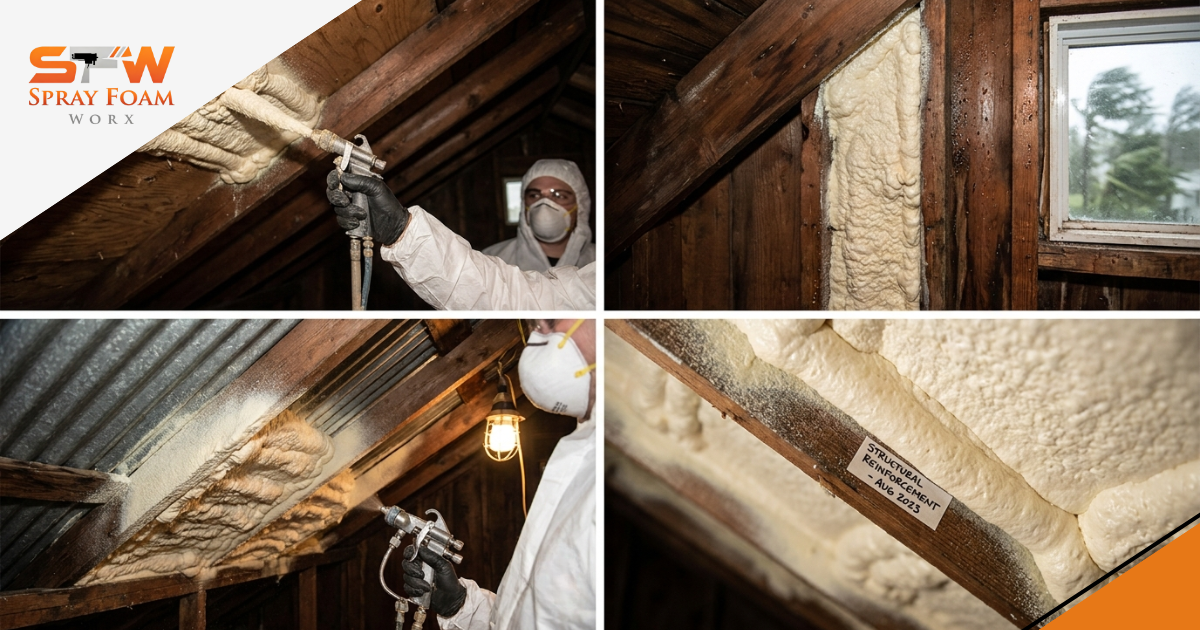


Hurricane Insulation Louisiana: Spray Foam Roof Deck Defense
Every June, homeowners across the Gulf South start watching the tropics, and for good reason. When a named storm spins toward shore, the roof is the first part of your home to face the wind—and the most common point of catastrophic failure. Smart hurricane insulation Louisiana families can count on does more than save energy; the right closed-cell spray foam bonds directly to your roof deck, helping it resist the wind uplift that tears sheathing loose and opens a home to the storm. As we head into the 2026 hurricane season, understanding how this works could be the difference between minor repairs and a destroyed roof.
At Spray Foam Worx, we install closed-cell foam on roof decks across Louisiana, Mississippi, Arkansas, and Texas, and we have seen how much difference a properly bonded roof assembly makes. This guide breaks down the physics of wind uplift, why closed-cell adhesion matters so much, and how the right foam turns a vulnerable roof into a reinforced one.
The Physics of Wind Uplift—and Why Roofs Fail
Hurricane wind does not simply push on a roof; it lifts it. As fast-moving air flows over a roof, it creates negative pressure—suction—above the surface, much like the airflow over an airplane wing generates lift. At the same time, wind that gets inside the home through a broken window or door pushes upward from below. Together, these forces try to peel the roof off, and they concentrate brutally on the connections between the sheathing and the framing.
This is the heart of the problem. Most roofs fail not because the shingles blow off first, but because the plywood or OSB sheathing detaches from the trusses, after which the wind gets underneath and removes large sections at once. Strengthening that sheathing-to-framing connection is exactly where closed-cell spray foam earns its place in any serious hurricane preparation plan.
Warm Gulf Water Is Making Storms Stronger
The threat is not static. Hurricanes draw their energy from warm ocean water, and according to NOAA Ocean Exploration, warmer waters fuel more energetic storms. With the Gulf running warm through late summer, storms that pass over it have more fuel to intensify—often rapidly—before landfall. For Louisiana homeowners, that means designing for stronger wind loads is no longer optional planning; it is realistic preparation.
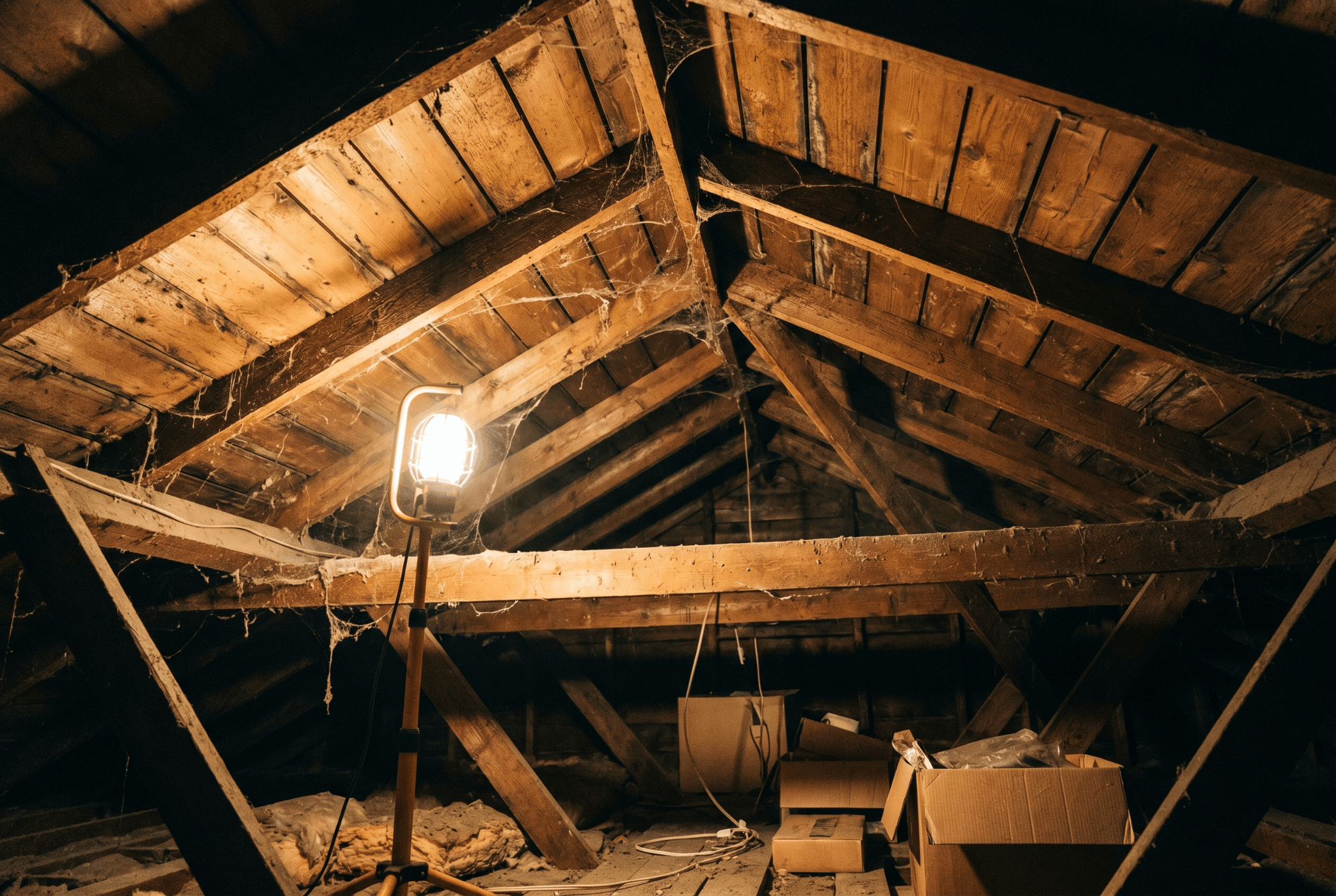
How Closed-Cell Foam Reinforces the Roof Deck
Closed-cell spray foam is dense and rigid once cured, and when it is applied to the underside of the roof deck, it does something fiberglass batts never could: it glues the assembly together. The foam bonds tightly to both the sheathing and the framing members it spans, turning loosely fastened components into a single bonded layer. That added adhesion is what boosts the roof's resistance to wind uplift.
The reinforcement effect is well documented. The U.S. Department of Energy's Building America Solution Center notes that sealing a roof deck with closed-cell spray foam along the sheathing seams and framing connections can help an existing home meet recognized hurricane and high-wind fortification criteria. In plain terms, the foam strengthens the exact connection that tends to fail first in a storm.
This structural benefit is one of the headline advantages of closed-cell spray foam insulation, which cures into a hard, rigid layer that reinforces sheathing and reduces racking across the whole assembly.
Adhesion: The Property That Does the Work
Adhesion is the key word. A nailed-down roof relies on a limited number of fasteners, each one a potential failure point. Closed-cell foam, by contrast, bonds continuously across every surface it touches—there are no joints or edges for the wind to grab and no reliance on a handful of nails. That continuous bond spreads uplift forces across the entire deck instead of concentrating them at individual fasteners.
A Sealed Roof Deck Resists Pressurization
There is a second benefit beyond raw strength. By creating an unvented, sealed roof deck, closed-cell foam removes the vented soffits and openings that let wind-driven rain and air into the attic. When a home cannot pressurize internally, it is far less likely to suffer the sudden internal push that, combined with external suction, blows roofs off. The sealed deck and the structural bond work together.
How a Closed-Cell Roof Deck Defends Your Home
When a storm hits, a properly foamed roof deck protects the home in a sequence of reinforcing ways:
- It bonds sheathing to framing — The foam glues the deck panels to the trusses, strengthening the connection that usually fails first.
- It distributes uplift forces — Continuous adhesion spreads suction across the whole deck rather than loading individual nails.
- It seals out wind-driven rain — An unvented deck closes the soffit and seam openings that let water and air into the attic.
- It limits internal pressurization — A sealed envelope reduces the sudden internal pressure spikes that help blow roofs off.
- It keeps performing year-round — The same foam that defends against wind also cuts cooling costs through Louisiana's brutal summers.
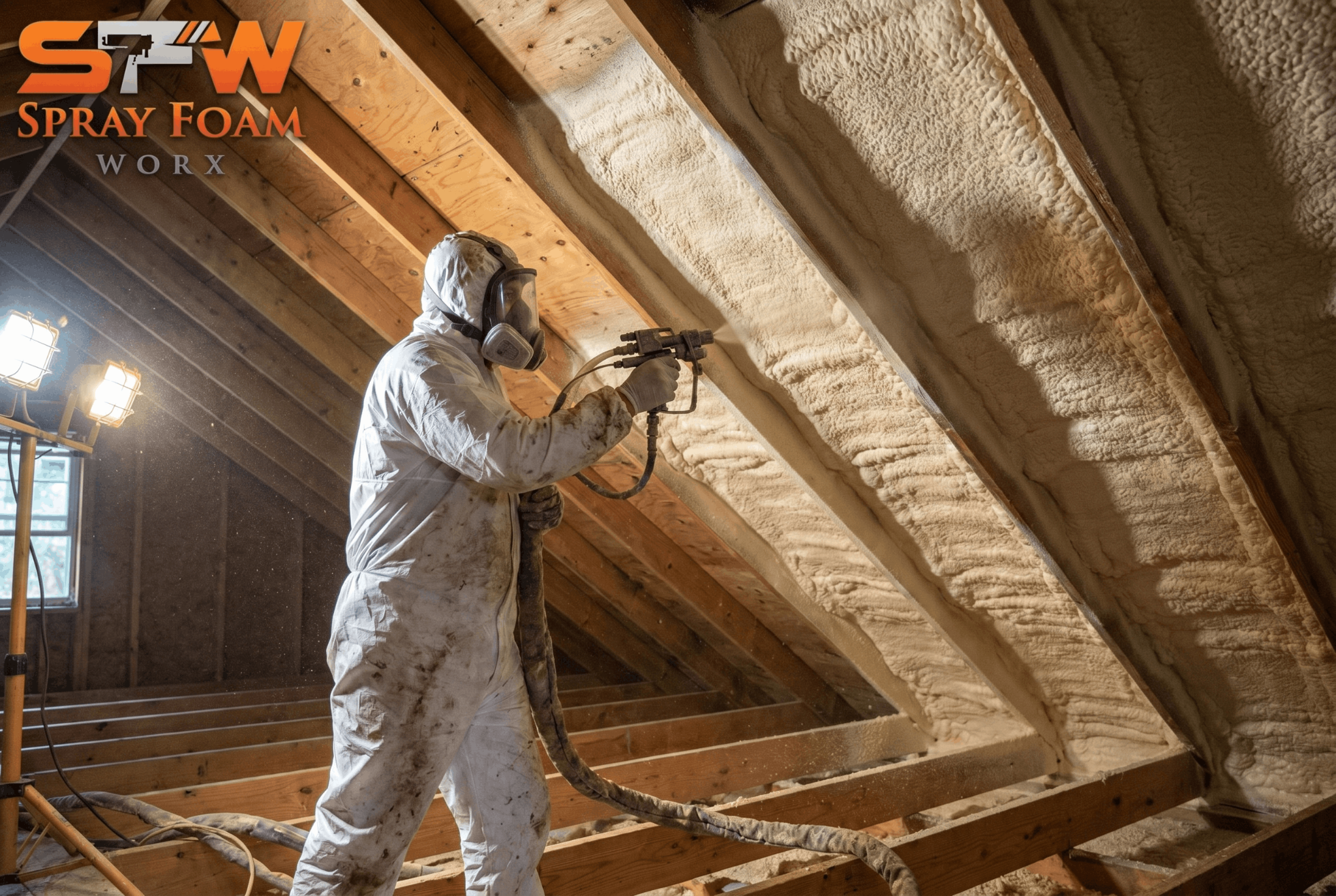
Why Closed-Cell, Not Open-Cell, for Hurricane Defense
Both spray foams seal air, but they are not equals when the goal is structural strength. Open-cell foam is lighter and softer—excellent for filling deep cavities and dampening sound, but it does not add meaningful rigidity. For wind-uplift reinforcement, density and stiffness are what matter, and that is where closed-cell wins decisively.
Closed-cell foam delivers roughly R-6.5 to R-7+ per inch, cures rigid, and reinforces the deck—ideal for roof lines, while open-cell spray foam insulation remains a strong, cost-effective choice for interior walls and sound control where structural reinforcement is not the objective. The two materials are tools for different jobs.
Choosing the Right Foam for Each Part of the Home
A practical approach often uses both: closed-cell on the roof deck for hurricane resilience and moisture control, and open-cell elsewhere for comfort and budget. The deciding factors come down to a few priorities:
- Structural strength — Choose closed-cell where reinforcement and rigidity matter, such as the roof deck.
- Moisture resistance — Closed-cell's low perm rating resists the wind-driven water a hurricane brings.
- R-value in tight spaces — Closed-cell's high R per inch hits code targets without an over-thick assembly.
- Budget and depth — Open-cell can be the smart pick for interior cavities where strength is not the goal.
Reinforce Your Roof Before the Next Storm
The time to strengthen a roof deck is before a storm is in the Gulf, not after. A closed-cell foam application takes most homes a single day, and it pays you back every summer in lower cooling bills while standing ready for hurricane season. As a locally owned team serving Louisiana and the wider Gulf South, Spray Foam Worx can assess your roof and recommend the right approach for your home.
📞 Call Spray Foam Worx today at +1-318-235-8116 to schedule your roof deck assessment before the 2026 hurricane season ramps up.
Ready to Strengthen Your Home Against Hurricane Season?
Calculate Your Savings Instantly
Planning your home improvement budget shouldn't be guesswork. Use our interactive tool to estimate your project requirements and potential utility savings:
👉 Try the Spray Foam Worx Calculator & Quote Generator

FAQ
How to get R30 with spray foam?
With closed-cell spray foam, which delivers roughly R-6.5 to R-7 per inch, you generally reach R-30 with about 4.5 to 5 inches of foam. Open-cell foam, at around R-3.6 to R-3.9 per inch, would need roughly 8 inches or more to hit the same target. The exact thickness depends on the specific product and the assembly, which is why a professional measures your roof deck or walls and sprays in controlled lifts to reach your code R-value accurately.
Which spray foam is the strongest?
Closed-cell spray foam is by far the stronger of the two. It cures into a dense, rigid material that reinforces sheathing, reduces racking, and adds structural strength to roofs and walls, whereas open-cell foam stays light and soft. That rigidity is exactly why closed-cell is the right choice for hurricane roof deck reinforcement. Open-cell still excels at air sealing and sound control, but it does not add meaningful structural strength to an assembly.
Does spray foam increase wind load?
It does not increase the wind load on your home; it increases your roof's resistance to it. Wind load is the force the storm applies, and closed-cell foam helps your roof withstand that force by bonding the sheathing to the framing. According to the U.S. Department of Energy's Building America program, sealing the roof deck with closed-cell foam can help a home meet hurricane and high-wind fortification standards. The foam strengthens the connections that wind uplift tends to break first.
Does warmer water make hurricanes stronger or weaker?
Warmer water makes hurricanes stronger. Hurricanes draw their energy from warm ocean water, and NOAA explains that warmer waters fuel more energetic storms by pumping more heat and moisture into the system. As long as a storm stays over warm water and is not torn apart by high-altitude winds, it strengthens. This is why warm late-summer Gulf temperatures are a serious concern for Louisiana, and why building for stronger wind loads is sensible preparation.
How thick does spray foam need to be for R30?
For closed-cell foam at about R-6.5 to R-7 per inch, R-30 typically requires roughly 4.5 to 5 inches of thickness. Open-cell foam needs considerably more—around 8 inches—because its R-value per inch is lower. Closed-cell's higher R per inch is a major advantage on roof decks and in tight cavities, since it hits the target R-value without an over-thick assembly. A professional confirms the exact depth based on your specific product and where it is being applied.


