.svg)
.svg)

.svg)


Lower Your AC Bill in Louisiana with a Spray Foam Attic
If your air conditioner seems to run nonstop from June through September and your utility statement still climbs every month, your attic is almost certainly the culprit. The single most effective way to lower AC bill Louisiana homeowners face is to stop the heat pouring in through an under-insulated, leaky attic—and a spray foam attic does exactly that.
By sealing air leaks and adding a high R-value barrier between the brutal Gulf Coast sun and your living space, spray foam can dramatically cut how hard your system has to work. For many homes, the savings on summer cooling are substantial.
At Spray Foam Worx, we insulate attics across Louisiana and the wider Gulf South, and the story is almost always the same: a hot, vented attic dragging down a whole home's efficiency. Below, we break down why that happens and how air sealing and R-value work together to bring your cooling costs back down to earth.
Why Your Louisiana Attic Is Driving Up Your AC Bill
On a sunny Louisiana afternoon, a traditional vented attic can climb well above 130°F—far hotter than the air outside. That superheated air sits directly above your ceiling, and all that heat radiates down into the rooms you are paying to cool. Your air conditioner ends up fighting a furnace overhead, running longer and longer cycles just to hold a comfortable temperature.
Two separate problems are at work. First, hot air leaks into your home through countless small gaps where the attic meets the living space. Second, traditional insulation simply slows heat rather than stopping the air movement. To truly lower AC bill Louisiana summers create, you have to address both the air leaks and the thermal barrier—which is precisely what spray foam is built to do.
The Hidden Cost of Air Leaks
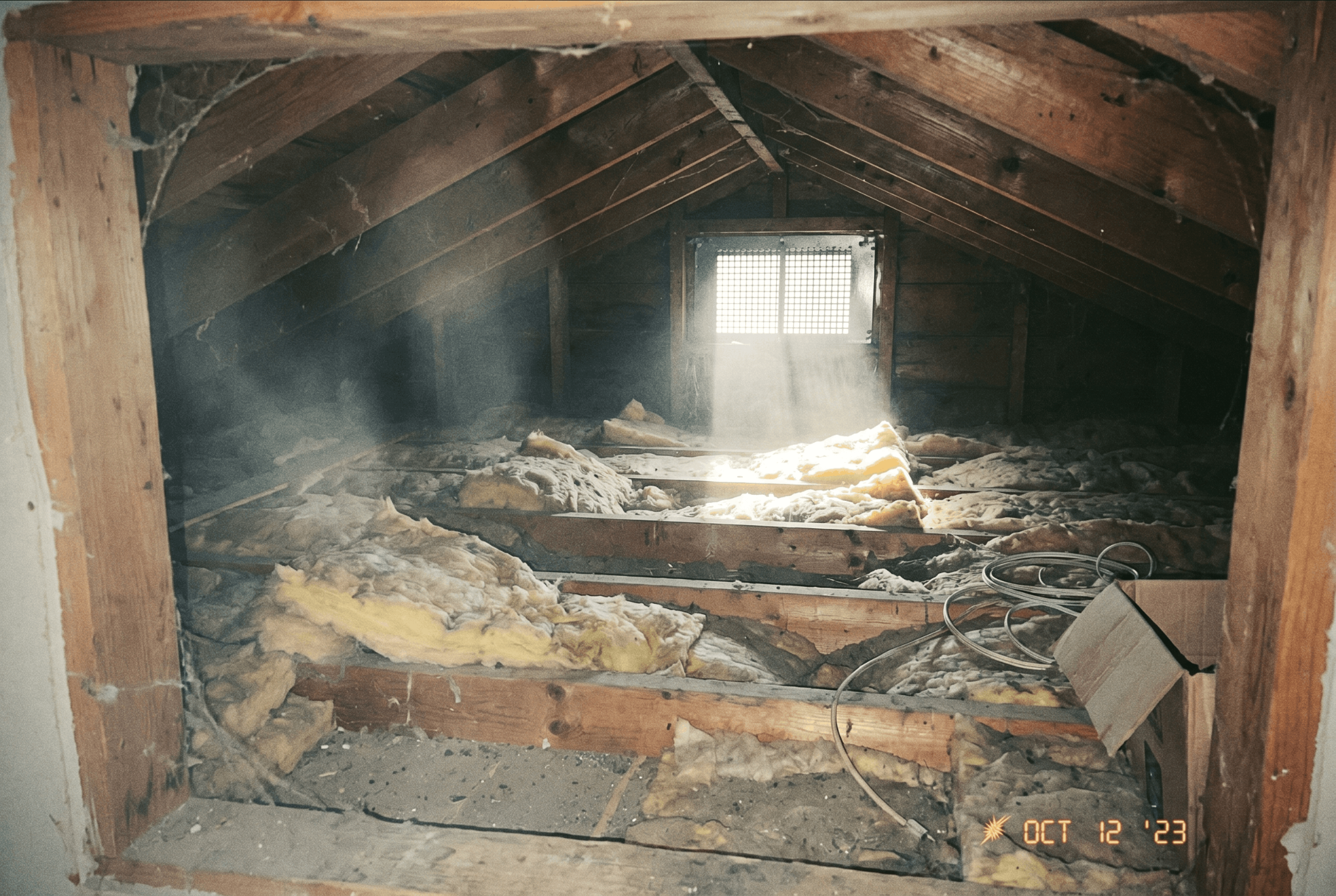
Most homes leak far more air than their owners realize. Recessed lights, attic hatches, wiring penetrations, and the top plates of walls all let conditioned air escape and hot attic air sneak in. Every cubic foot of cool air that leaks out is replaced by hot, humid outdoor air your AC then has to cool and dry all over again. Plugging those leaks is often the fastest path to a lower bill.
Air Sealing: The First Step to Real Savings
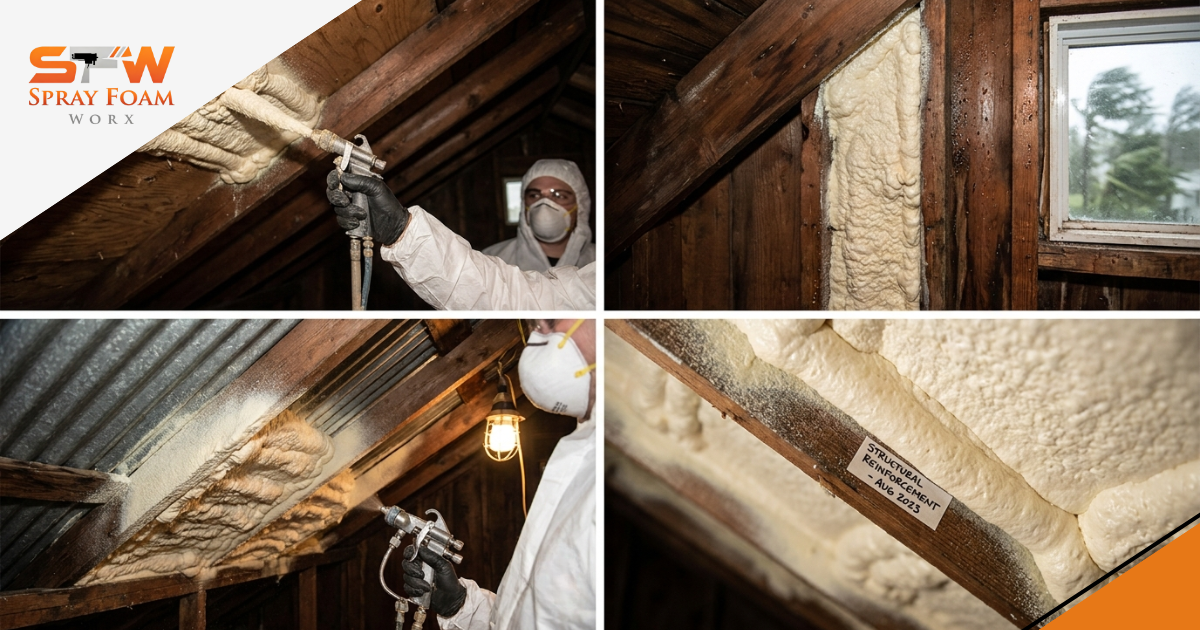
Spray foam's biggest advantage over traditional insulation is that it air seals as it insulates. As the foam is applied, it expands to fill cracks, gaps, and irregular spaces, forming a continuous airtight barrier. Where fiberglass batts let air pass straight through, foam stops it. This is why a spray foam attic can reduce the uncontrolled air leakage that makes Louisiana cooling so expensive.
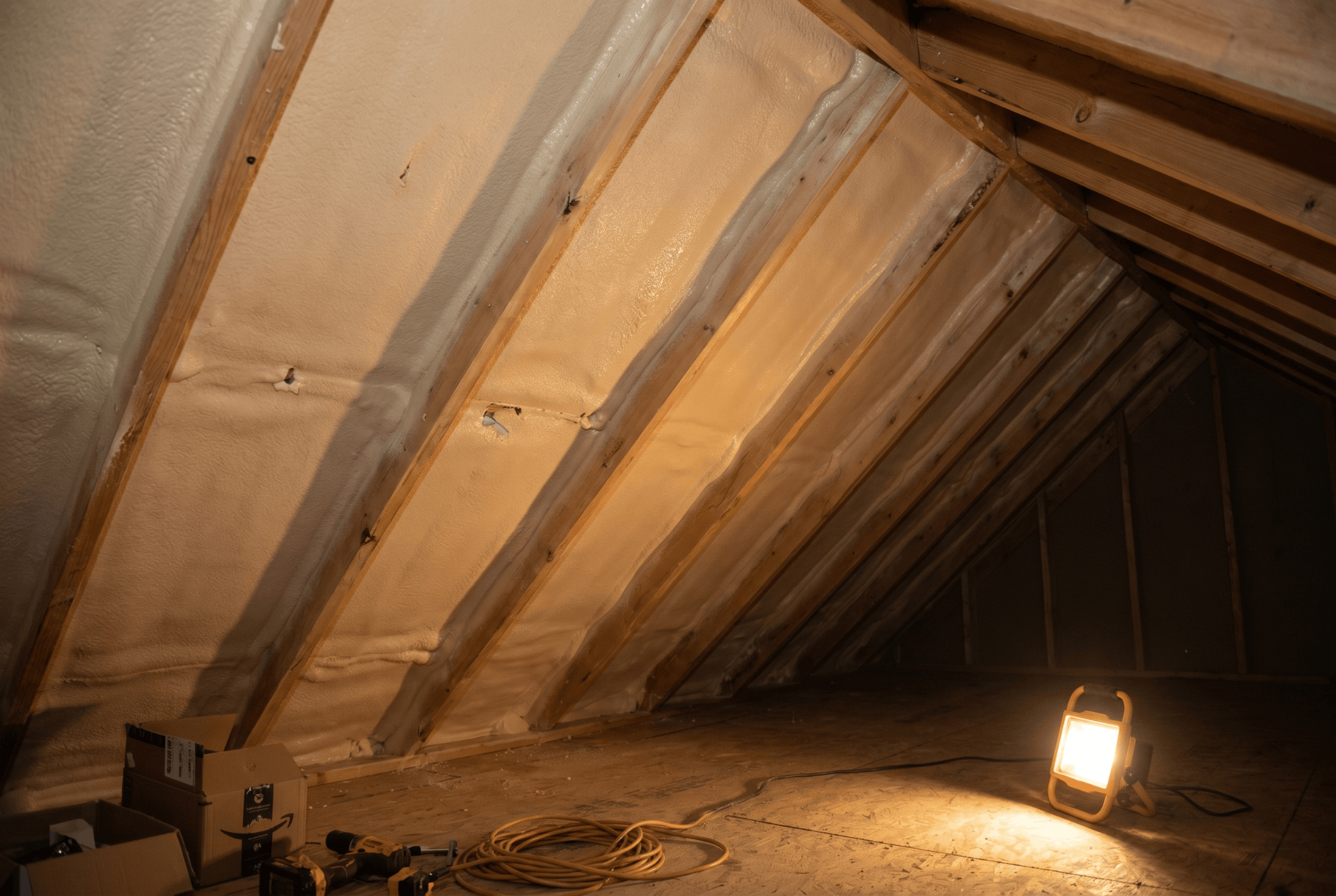
When you seal the attic at the roofline instead of the ceiling, you bring the whole attic inside the home's conditioned envelope. Ductwork and HVAC equipment up there no longer bake in 130-degree heat; they operate in a far milder space, which means less energy wasted and longer equipment life. This approach, often paired with open-cell spray foam insulation for attic roof lines, is a proven way to tame summer bills.
From a Vented Attic to a Conditioned One
A conditioned attic is one of the most impactful upgrades a Gulf Coast home can make. By moving the insulation and air barrier up to the roof deck, the attic stays close to the temperature of the rest of the house. Your ducts stop leaking cooled air into a furnace-like space, and the rooms below stop absorbing radiant heat from above. The comfort difference is immediate, and so is the effect on your bill.
R-Value: Stopping the Gulf Coast Heat
Air sealing handles leaks; R-value handles conductive heat. R-value measures how well a material resists heat flow, and the higher the number, the better the barrier. Spray foam delivers strong R-value in a relatively thin layer, which matters in attics where space and roofline depth are limited.
The two foam types hit different points on the scale. Open-cell foam provides roughly R-3.6 to R-3.9 per inch and excels at sealing and sound control, while closed-cell spray foam insulation packs about R-6.5 to R-7+ per inch along with moisture resistance and added rigidity. Reaching a target like R-30 takes only a few inches of closed-cell foam, letting you hit code-level performance without an over-thick assembly.
For independent guidance on how much insulation a home in our climate actually needs, the U.S. Department of Energy's ENERGY STAR attic insulation recommendations are a useful, unbiased reference point.
How a Spray Foam Attic Lowers Your Summer Bill
Here is how the savings actually add up, step by step:
- It seals the air leaks — Foam closes the gaps that let cooled air escape and hot, humid air pour in.
- It blocks radiant and conductive heat — A high R-value barrier at the roofline stops the attic from baking your ceilings.
- It cools your ductwork's environment — A conditioned attic keeps ducts and HVAC equipment out of extreme heat.
- It shortens AC run times — With less heat to fight, your system cycles less and uses less power.
- It keeps comfort steady — Rooms hold temperature evenly instead of swinging hot near the ceiling.
What to Know Before You Insulate
Spray foam is a serious upgrade, and getting it right matters. The energy savings and comfort gains are real, but they depend on a professional, properly detailed installation. A few things are worth understanding before you commit:
- Quality of installation is everything — Correct thickness, even coverage, and proper cure are what deliver both the savings and a trouble-free result.
- Moisture detailing matters — A sealed roof deck must be detailed correctly so the assembly manages moisture properly in our humid climate.
- It is a long-term investment — Foam is durable and built to last, so the upfront cost pays back over years of lower bills.
- Documentation protects you — Photos, measurements, and a code-aware workflow give you a clear record of what was installed.
This is exactly why choosing an experienced, documented installer is so important. Many of the cautionary stories about spray foam trace back to rushed or poorly applied jobs—not the material itself when it is installed correctly.

Stop Overpaying to Stay Cool
You do not have to dread your summer utility statements. A spray foam attic seals the leaks, blocks the heat, and lets your AC finally keep up—often cutting cooling costs significantly. Most homes can be insulated in a single day by our team, and the savings start with the very next billing cycle. As a locally owned company serving Louisiana, Mississippi, Arkansas, and Texas, Spray Foam Worx will assess your attic and recommend the right foam for your home and budget.
📞 Call Spray Foam Worx today at +1-318-235-8116 for a free attic assessment and start lowering your AC bill this summer.
Ready to See Your Summer Savings?
Calculate Your Savings Instantly
Planning your home improvement budget shouldn't be guesswork. Use our interactive tool to estimate your project requirements and potential utility savings:
👉 Try the Spray Foam Worx Calculator & Quote Generator

FAQ
Is spray foam insulation worth it in the attic?
For most Gulf Coast homes, yes. The attic is where the majority of unwanted summer heat enters, so sealing and insulating it tends to deliver the biggest return of any insulation upgrade. Spray foam both air seals and provides high R-value, which traditional batts cannot do at the same time. The upfront cost is higher than fiberglass, but the ongoing savings on cooling and the improved comfort usually make it well worth it over time.
What is the least expensive way to insulate an attic?
Blown-in fiberglass or batt insulation has the lowest upfront cost, which is why it is the most common budget option. It slows heat transfer but does not air seal, so leaks remain unless they are addressed separately. For homeowners focused only on initial price, traditional insulation is cheapest, but it often costs more over the years through higher energy bills. The least expensive option upfront is not always the least expensive over the life of the home.
Why are people removing spray foam insulation?
Most of the removal stories come from the UK, where mortgage lenders and surveyors have raised concerns that foam on roof timbers can hide the wood and make the roof hard to inspect, sometimes complicating home sales. In nearly every case, the underlying issue is poor installation or inadequate moisture detailing rather than the material itself. A correctly installed, well-documented job by an experienced contractor avoids these problems, which is why choosing the right installer matters so much.
What are the negatives of spray foam?
The main drawbacks are a higher upfront cost than fiberglass and the fact that it must be installed correctly to perform well. Poor application—wrong thickness, uneven coverage, or bad moisture detailing—can cause problems, and foam is harder to remove later than loose insulation. During installation the area must be properly ventilated and allowed to cure. When a qualified professional handles it, these negatives are largely avoided and the long-term benefits clearly outweigh them.
What is the cheapest but most effective insulation?
It depends on how you weigh upfront cost against long-term value. Blown-in fiberglass is the cheapest to install and reasonably effective at slowing heat, making it a solid budget choice. Closed-cell spray foam costs more initially but is the most effective overall, combining air sealing, high R-value, and moisture resistance in one step. For many Louisiana homes, a mix—foam where it matters most and fiberglass elsewhere—offers the best balance of cost and performance.