.svg)
.svg)

.svg)


.png)


R-value Louisiana: Understanding State Insulation Requirements
Living in the Pelican State means balancing extreme humidity with sweltering summer heat. If your home isn’t holding its temperature, the culprit is likely a subpar thermal resistance level that many homeowners often overlook. Whether you are in New Orleans (Climate Zone 2) or Shreveport (Climate Zone 3), meeting specific R-value Louisiana building codes is the difference between a comfortable home and a massive Entergy or SWEPCO bill.
At Spray Foam Worx, we specialize in bringing aging structures up to modern energy compliance, ensuring your attic acts as a shield rather than a heat sponge.
Why R-Value Louisiana Standards Matter for Your Home
The "R" in R-value stands for thermal resistance. Essentially, the higher the value, the better the material prevents heat from entering or leaving your home. In our subtropical climate, achieving the correct R-value Louisiana attic standard is critical because heat radiates directly through your roof deck.
Without high-quality installation, your AC unit works overtime, leading to premature mechanical failure. Modern codes have tightened; what was considered "good enough" ten years ago no longer meets the benchmarks required for new construction.
Decoding Building Codes and R-Value Louisiana Zones
Louisiana is divided into two primary climate zones. Understanding which zone you fall into is the first step in optimizing your insulation strategy.
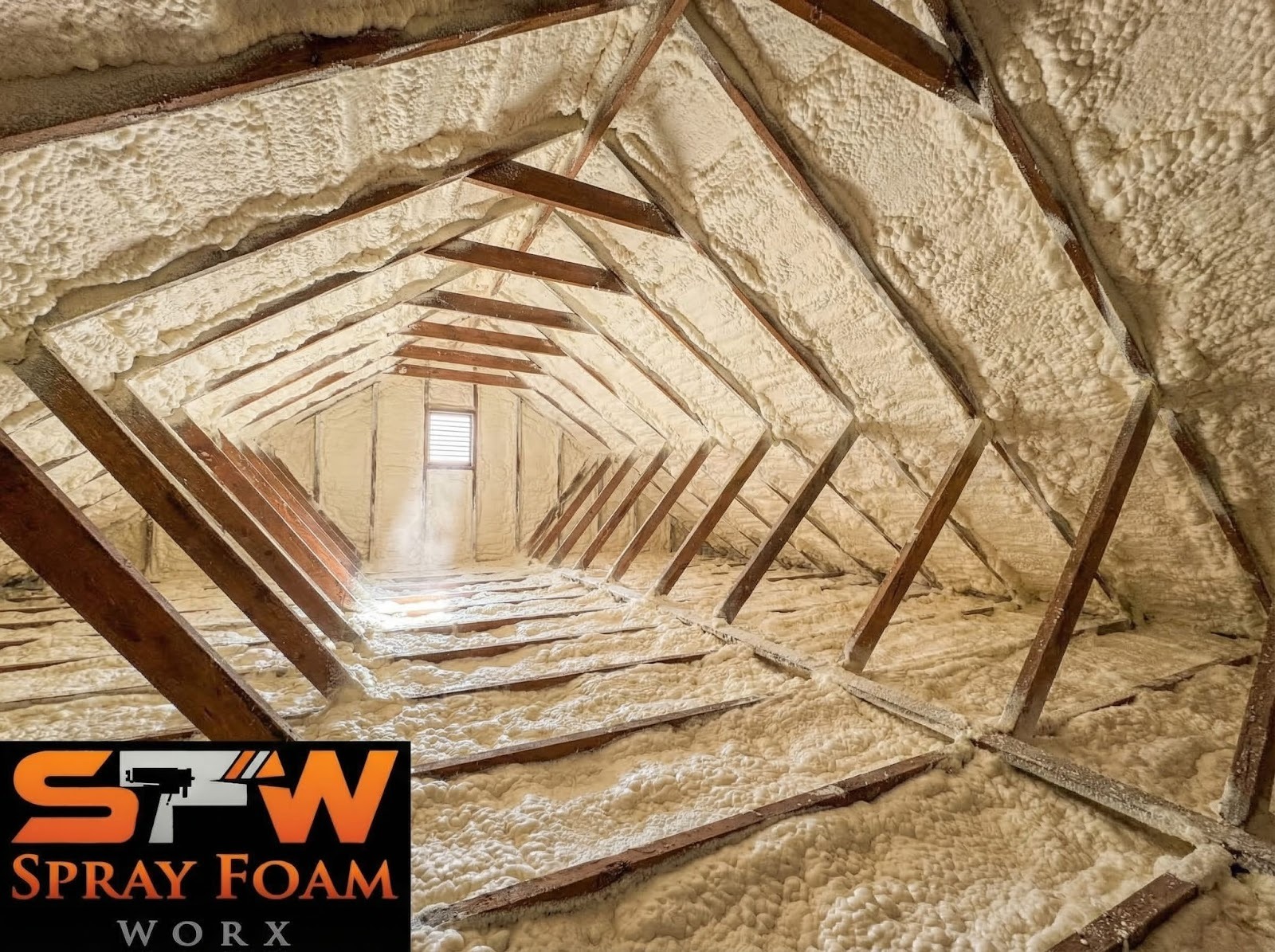
- Climate Zone 2 (South): For residents in New Orleans, Baton Rouge, and Lafayette, Zone 2 standards apply. To meet current R-value Louisiana building codes here, attics typically require a minimum of R-38.
- Climate Zone 3 (North): For clients in Alexandria or Monroe, requirements are slightly more stringent. If you have existing, moisture-damaged materials, a professional vacuum insulation removal is often the first step to reaching compliance.
The Numerical Impact of Proper R-Value Louisiana Insulation
Upgrading your insulation is a financial investment with immediate returns:
- 40% Reduction in Heat Flux: Moving from an R-19 to a modern R-38 can reduce heat transfer by nearly half.
- 15-20% Lower Monthly Bills: Homeowners who hit the target levels see immediate relief on energy statements.
- 85-Degree Attic Temps: In peak July heat, a home with the correct R-value Louisiana can see attic temperatures drop from 140°F to a manageable 85°F.

Attic Standards: Choosing the Right Material for R-Value Louisiana
To reach mandated levels, you must choose a material that stands up to 90% humidity:
- Closed-Cell Spray Foam: Provides the highest resistance per inch (approx. R-6.5 to R-7). It also acts as a vapor barrier, which is crucial for swampy air.
- Open-Cell Spray Foam: A cost-effective option for meeting attic standards while filling every gap that causes air leaks.
- Blow-in Fiberglass: A classic choice, though it requires significantly more depth to reach the same performance as foam.
Energy Compliance: The Spray Foam Worx Process
Meeting R-value Louisiana building codes requires precision. We don’t just "spray and go"; we engineer a solution for your specific rafters.
1. Assessment of Existing R-Value Louisiana Levels
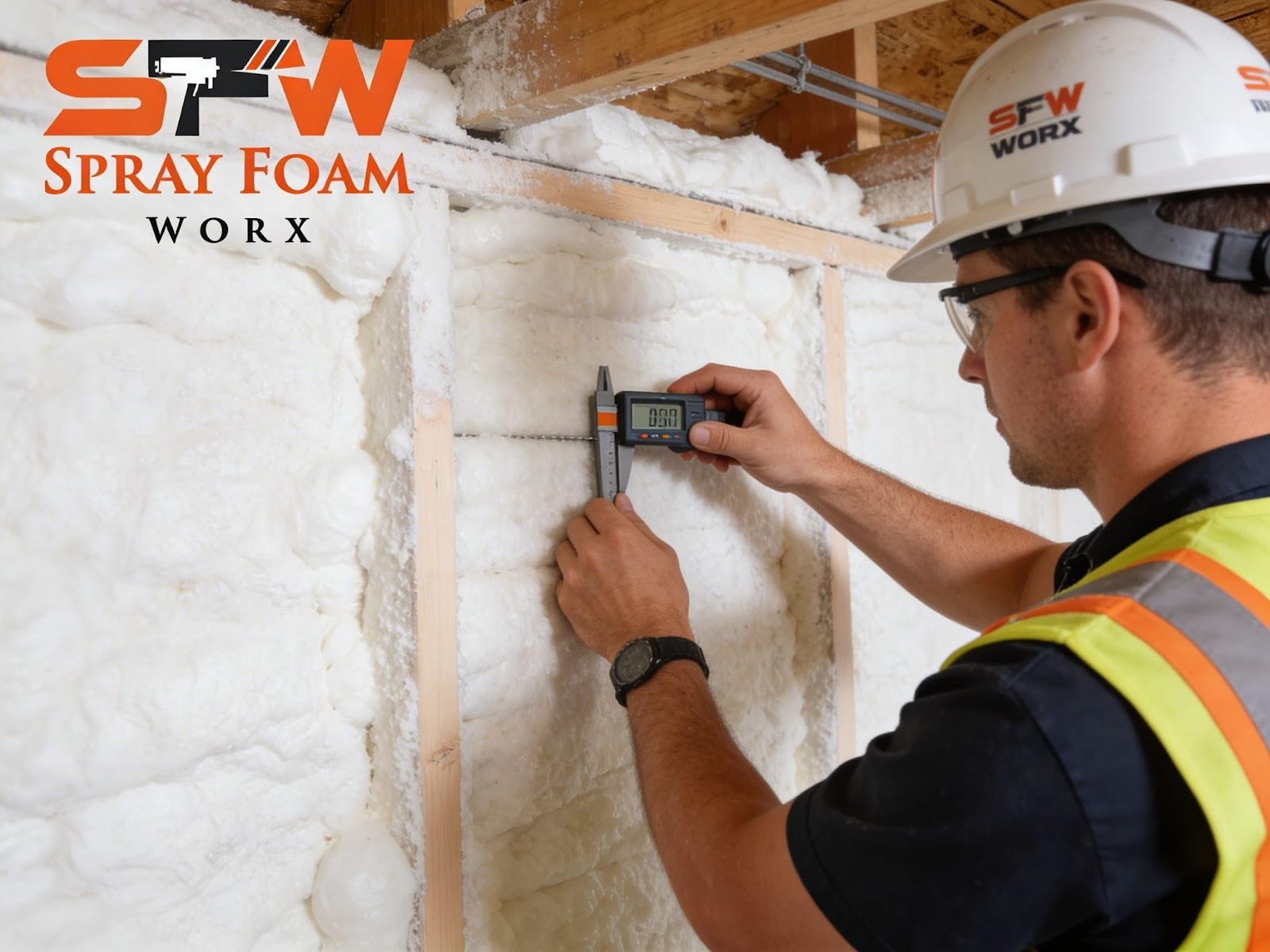
We begin by measuring your current insulation depth. Most older NOLA homes are hovering at an R-11 or R-15, which is far below the modern R-value Louisiana requirement. We also check for moisture and pest damage.
2. Achieving R-Value Louisiana via Air Sealing
Before we add material, we seal the bypasses. A high R-value Louisiana is useless if hot air is leaking through your light fixtures, plumbing stacks, and top plates. We call this "plugging the holes" before we "put on the blanket."
3. Final Verification of R-Value Louisiana Standards
Once installed, we verify that the thickness of the foam or fiberglass meets or exceeds the R-value Louisiana standards for your specific climate zone. This ensures you are fully compliant with local parish building codes.
The Long-Term Benefits of R-Value Louisiana Compliance
Beyond simply following state law, achieving the correct thermal performance offers several quality-of-life improvements for your home:
- HVAC Longevity: When your home maintains a steady temperature, your AC unit doesn't have to cycle as often, adding years to its lifespan and reducing repair costs.
- Humidity Control: Proper insulation—specifically spray foam—helps keep the "wet" Gulf South air out, preventing that sticky feeling inside your home and protecting against mold.
- Resale Value: Homes with documented energy compliance and high R-value Louisiana ratings sell faster and for more money in today's green-conscious real estate market.
Contact Spray Foam Worx for Your R-Value Louisiana Upgrade
Don't let outdated building standards drain your bank account or ruin your comfort. Ensure your home meets the latest R-value Louisiana requirements for maximum efficiency and a lower carbon footprint. Our team of experts is ready to transform your attic into a high-performance thermal barrier.
📞 Call us today at +1-318-235-8116 to schedule an inspection.
We will help you understand your current R-value Louisiana standing and provide a free quote to bring your home up to modern code.
FAQ
Q1: What is the R-value in Louisiana?
Required standards are primarily dictated by the 2021 IECC, which the state has adopted. For most residential attics, building codes now mandate an R-38. However, if you are building a high-efficiency home, you might aim for a total R-value Louisiana homeowners use for maximum savings, such as R-49. Meeting these specific targets for your parish is essential for passing inspections.
Q2: What is a good R-value for a house?
A "good" target for an attic is at least R-38 to stay ahead of rising temperatures. While older homes were often built to an R-19 standard, modern energy science shows that doubling that resistance is the only way to truly combat the radiant heat from the Gulf South sun. For walls, a rating of R-13 to R-15 is typically considered the minimum for a comfortable living space.
Q3: Is R-14 or 15 better insulation?
R-15 is objectively better than R-14 because it offers a higher degree of thermal resistance. However, it is important to realize that neither is sufficient for an attic on its own; you would need to stack these values or use high-density spray foam to reach the total R-value Louisiana compliance levels required by state law.
Q4: Which R-value is good?
For a local attic, a "good" rating starts at R-38 and goes up to R-49. For crawl spaces and floors, R-13 to R-19 is typically the standard. The definition of "good" depends entirely on which part of the home's thermal envelope you are trying to seal to meet current energy codes.
Q5: Which R-value is the strongest?
In terms of resistance per inch of thickness, closed-cell spray foam offers the "strongest" R-value Louisiana performance on the market. It typically provides a rating of 6.5 to 7 per inch. This allows homeowners to reach high targets even in tight historic rafters or narrow wall cavities where traditional bulky fiberglass batts simply won't fit.