.svg)
.svg)

.svg)




How do you prep for insulation? Homeowner’s SOP Guide
Upgrading your home’s efficiency is an exciting milestone, but knowing exactly how the installation day unfolds can ease any anxiety. At Spray Foam Worx, we follow a strict Standard Operating Procedure (SOP) to ensure that every project is safe, efficient, and clean.
From the moment our rigs pull into your driveway to the final handshake, here is your comprehensive guide to the installation steps for your Louisiana home.
Phase 1: The Essential Prep Work for a Smooth Insulation Process
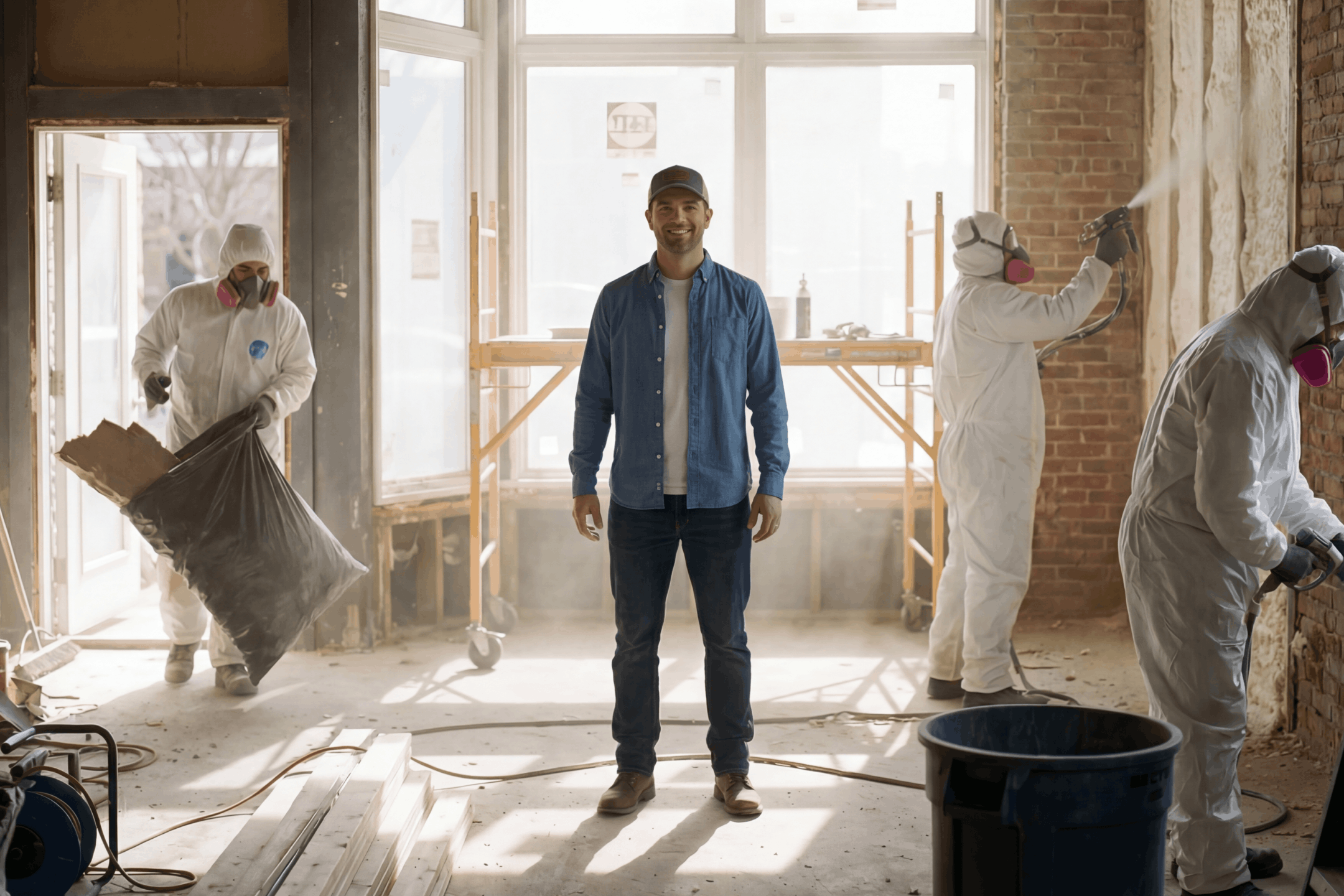
How do you prep for insulation? A successful project starts long before the first spray of foam or the first bag of fiberglass. Prep work is the foundation of a high-quality install. Our team begins by protecting your living space, ensuring that the work doesn't leave a footprint outside of the attic zone.
- Staging and Protection: We use drop cloths and plastic sheeting to cover flooring and furniture near the access point.
- Clearing the Workspace: For an effective installation, we need clear access. If you haven't opted for our vacuum insulation removal service, we ensure the workspace is organized for safety.
Safety Briefing: Our technicians perform a final walkthrough to confirm that all electrical boxes are flagged and that our work won't interfere with your home's wiring.

Phase 2: Managing Airflow and Attic Venting
One of the most technical parts of our SOP is managing your home's "breathability." Depending on whether you choose open-cell spray foam or closed-cell spray foam, the venting requirements will change.
Proper Venting Standards
If we are installing traditional materials, we must ensure baffles are in place to keep your soffit vents clear. During a spray foam application, we often seal these vents to create a "conditioned attic." This shift turns your attic from a 140-degree oven into a room that stays within 10 degrees of your living space.
Safety Ventilation
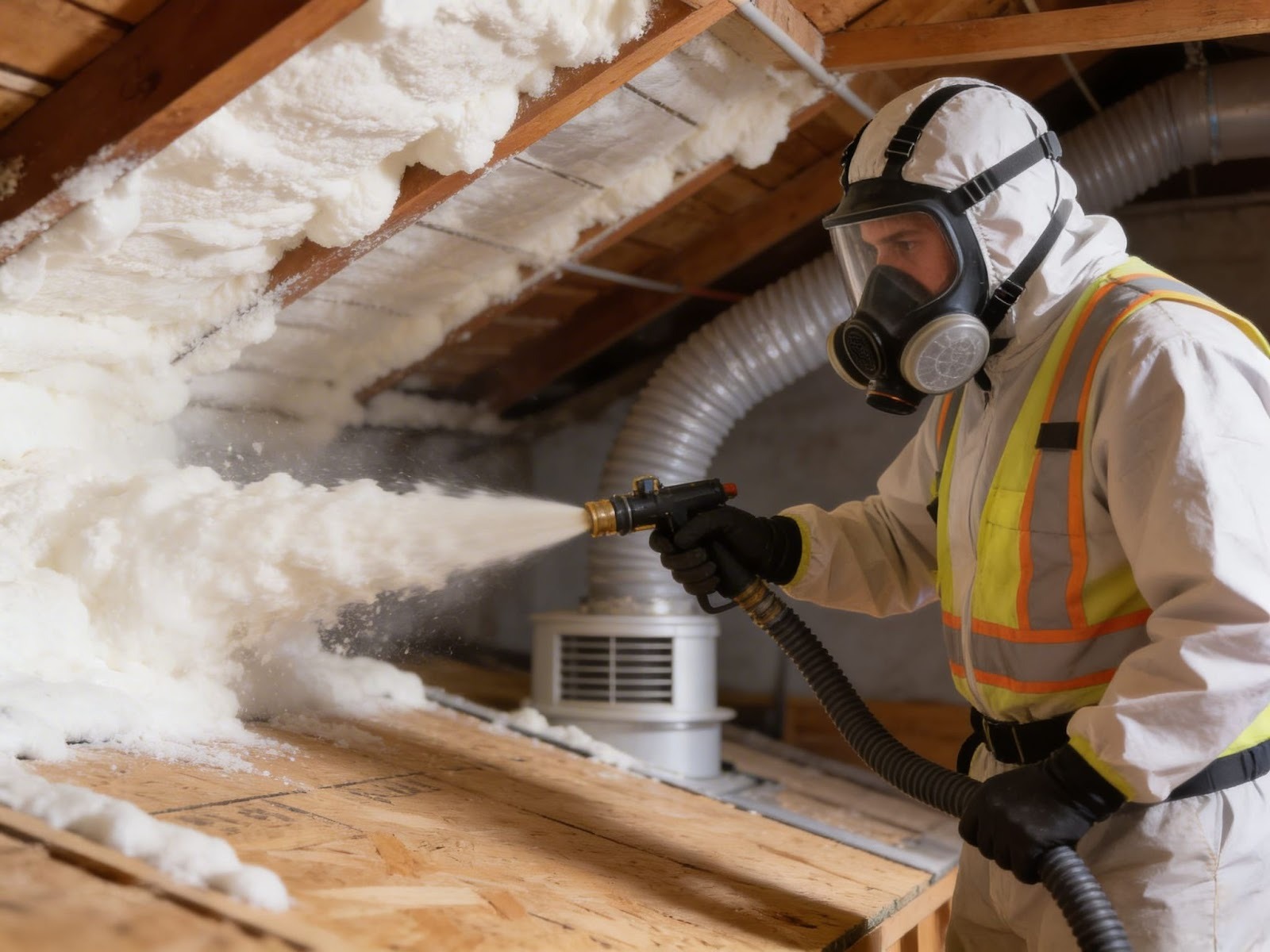
During the application phase, we use high-powered exhaust fans. These fans pull air out of the work area and vent it outdoors, ensuring that the air inside your home remains fresh while the technicians are active.
Phase 3: Application and Curing Time
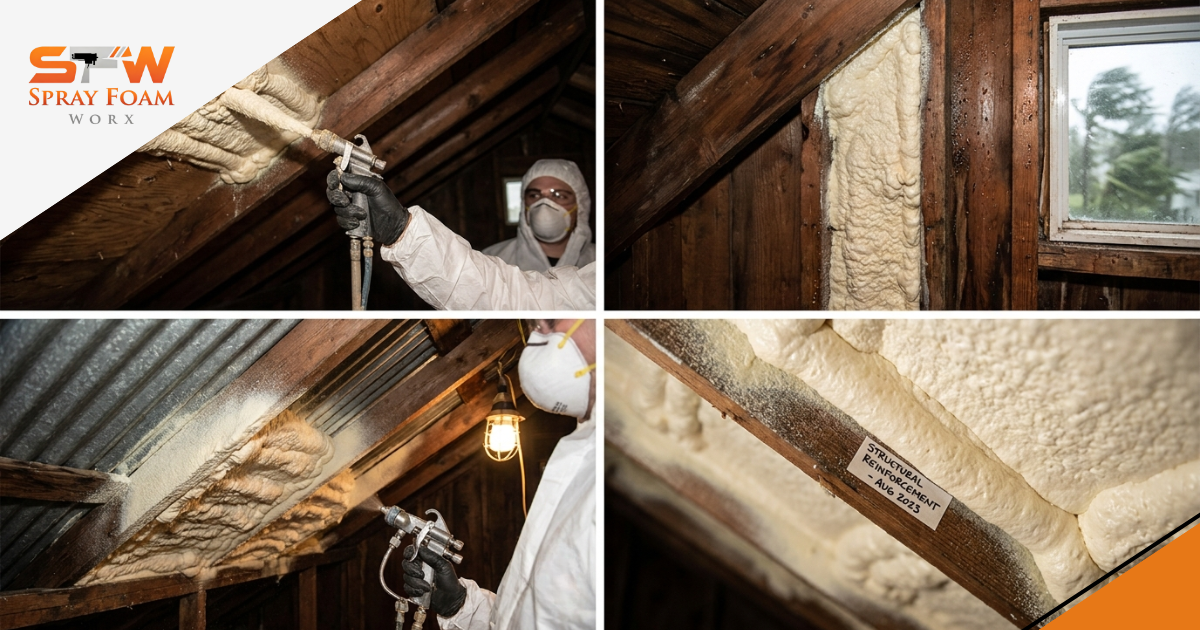
The most transformative part of the day is the application. This is where the liquid chemicals react to create the thermal barrier that will save you money for decades.
- The Chemical Reaction: Spray foam expands up to 100 times its liquid volume within seconds.
- Curing Time: For most residential projects, the initial curing happens in minutes. However, as part of a safe SOP, we recommend that homeowners and pets vacate the premises for 12 to 24 hours to allow for full off-gassing.
Phase 4: Why Professional Equipment Matters in the Insulation Process
We believe the job isn't finished until your home looks better than it did when we arrived. Our "White Glove" post-cleanup is a point of pride for the Spray Foam Worx team.
- Debris Removal: Any overspray or scrap material is bagged and hauled away.
- Vacuuming: We perform a final vacuuming of the staging area to ensure no dust remains.
- Quality Assurance: Our lead tech performs a "depth check" to ensure we hit the target R-value.
- Homeowner Walkthrough: We show you the results! We want you to see exactly how we have sealed your home before we pack up.
Phase 5: Post-Cleanup and Final Inspection
We believe the job isn’t finished until your home looks better than it did when we arrived. Our "White Glove" post-cleanup is a point of pride for the Spray Foam Worx team.
- Debris Removal: Any overspray or scrap material generated during the installation is bagged and hauled away.
- Vacuuming: We perform a final vacuuming of the staging area to ensure no dust or particles remain from the day's work.
- Quality Assurance: Our lead tech performs a "depth check" to ensure the application hit the target R-value.
- Homeowner Walkthrough: We show you the results! We want you to see exactly how the seal has transformed your home before we pack up our gear.
Phase 6: Life After the Insulation Process
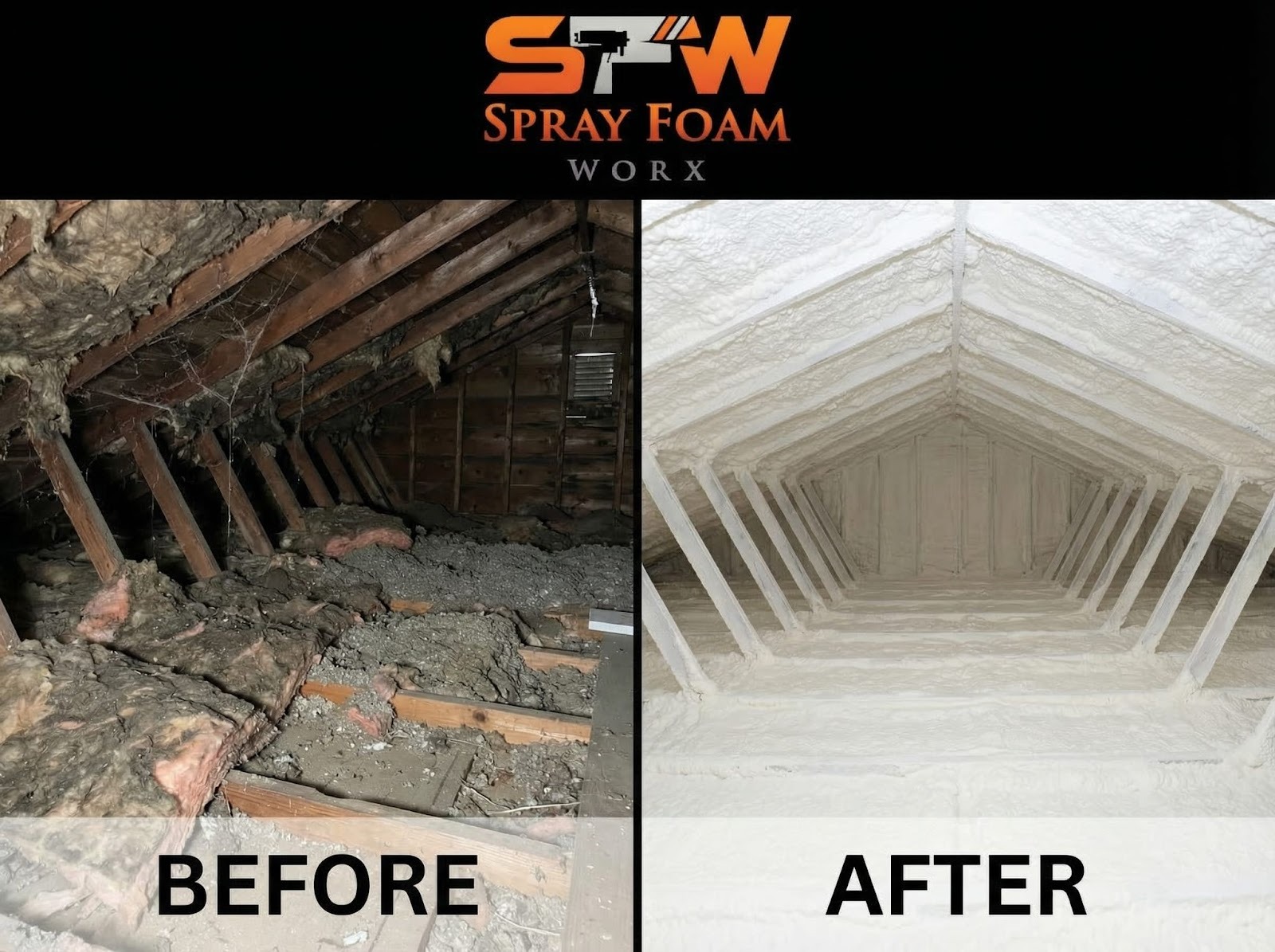
Once the work is complete and the site is clean, you will notice a difference almost immediately. Your AC unit, which previously struggled to keep up with the Louisiana humidity, will start cycling less frequently.
This isn't just a comfort upgrade; it's a long-term strategy for home preservation. By completing a professional project, you are preventing moisture from rotting your rafters and keeping pests from nesting in your attic floor. Now that you know how do you prep for insulation, you can move forward with confidence knowing your home is protected.
Contact Spray Foam Worx
How do you prep for insulation? By calling the pros. Our team is dedicated to providing the highest quality service in Louisiana. We handle the technical details so you can enjoy the savings.
📞 Call us at +1-318-235-8116 to start your high-performance insulation process today!
FAQ
Q1: What is the insulation process?
The insulation process is a systematic method for sealing a home's thermal envelope. It includes site preparation, old material removal, the precision application of new insulation, and thorough cleanup. At Spray Foam Worx, we tailor the insulation process to specifically handle the unique climate challenges of Louisiana.
Q2: How does insulation insulate?
Insulation works by reducing heat transfer through conduction and convection. During the insulation process, we install materials that trap air or gas, creating a barrier that keeps outdoor heat from entering your living space. This insulation process is what allows your home to maintain a consistent temperature with less energy.
Q3: What is type 3 insulation?
Type 3 insulation often refers to specialized high-density materials used for specific fire-resistance or industrial thermal needs. During a professional insulation process, we determine if these specific grades are required to meet your local building or fire codes for maximum safety and efficiency.
Q4: What are five types of insulation?
The five most common types used in an insulation process are spray foam (open/closed-cell), fiberglass batts, blown-in cellulose, mineral wool, and rigid foam boards. Each material requires a different insulation process and offers varying levels of R-value and moisture resistance.
Q5: What is type 4 insulation?
Type 4 insulation typically denotes high-strength extruded polystyrene (XPS) boards known for excellent moisture resistance and durability. While the insulation process for these boards differs from spray foam, they are sometimes used in hybrid applications for specialized moisture control in damp Louisiana environments.