.svg)
.svg)

.svg)


Protect Your Southern Home Using Hurricane Proofing with Spray Foam
Living in the Gulf Coast and across the South means facing the reality of extreme weather every year. As hurricane season approaches, the priority for every homeowner shifts to protection. When people consider hurricane proofing, the focus is almost always external such as impact-resistant windows or storm shutters. While these are critical defenses, some of the most effective and permanent results happen inside your walls and directly under your roof deck.
At Spray Foam Worx, we provide high-performance solutions that do more than just lower your utility bills. Our specialized closed-cell application physically bonds to your framing, fundamentally changing the structural physics of the building envelope. This article explores how investing in closed-cell spray foam insulation serves as a critical component of a comprehensive strategy for hurricane proofing with spray foam.
Stopping Roof Uplift with Advanced Hurricane Proofing with Spray Foam
The most devastating structural damage during a storm often begins when high winds create a powerful pressure differential that lifts the roof right off the house. In a severe hurricane, wind rushing over the roof creates a vacuum effect and pulls upward with thousands of pounds of force. Traditional methods rely on metal straps, but even those can fail if the plywood sheathing is ripped away from the rafters.
Creating an Unbreakable Structural Bond and Hurricane Proofing with Spray Foam
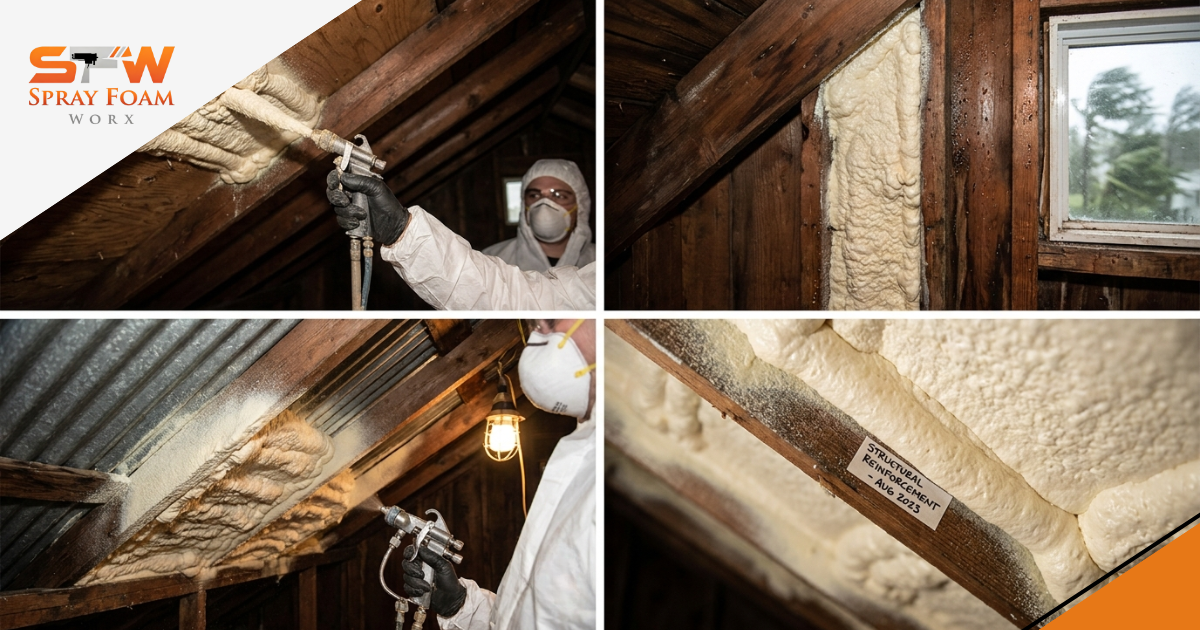
By applying closed-cell foam to the underside of your roof deck, you are essentially gluing the entire roof system together into a single monolithic structure. Engineering studies have demonstrated that hurricane proofing with spray foam can increase the force required to blow off a roof deck by up to 300%. The material expands into every gap and secures the seams between the plywood panels and the rafters, ensuring the wind cannot find a single weak point to exploit. This creates a continuous load path that transfers the wind forces safely down through the frame of the house.
Water Resistance as a Vital Pillar of Hurricane Proofing with Spray Foam
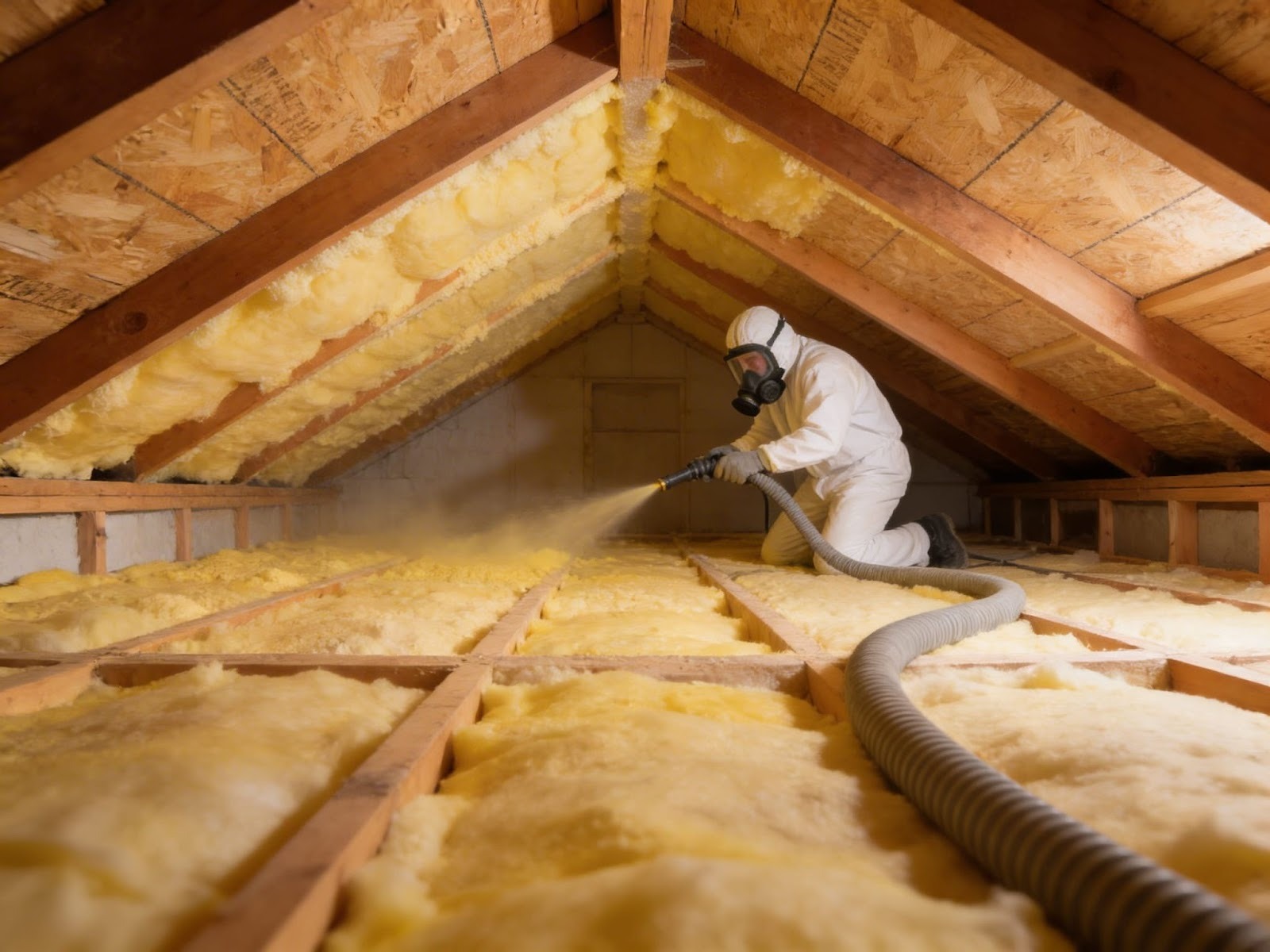
In a hurricane, wind is only half the battle because the second half is wind-driven rain which can approach a structure horizontally at over 100 mph. If your roof loses even a few shingles, water will find any opening and pour into your attic. Once inside, traditional materials act like a massive sponge and soak up hundreds of gallons of water, leading to rapid rot and mold growth long after the storm has passed.
The Hydrophobic Shield and Hurricane Proofing with Spray Foam
For effective long-term protection, closed-cell foam is the only choice because it is hydrophobic, meaning it repels water completely.
- Secondary Water Barrier: It creates a seamless waterproof shield on the inside of your roof. Even if your shingles are stripped away, the seal keeps the rain out and protects your ceilings.
- Flood Resistance: It is the only material rated by FEMA as Class 5 flood-resistant, making it a cornerstone of coastal hurricane proofing with spray foam.
- Preventing Structural Overload: Because it does not soak up moisture, it prevents the weight of wet insulation from overloading and collapsing your interior ceilings.
Boosting Structural Strength for Whole Home Hurricane Proofing with Spray Foam
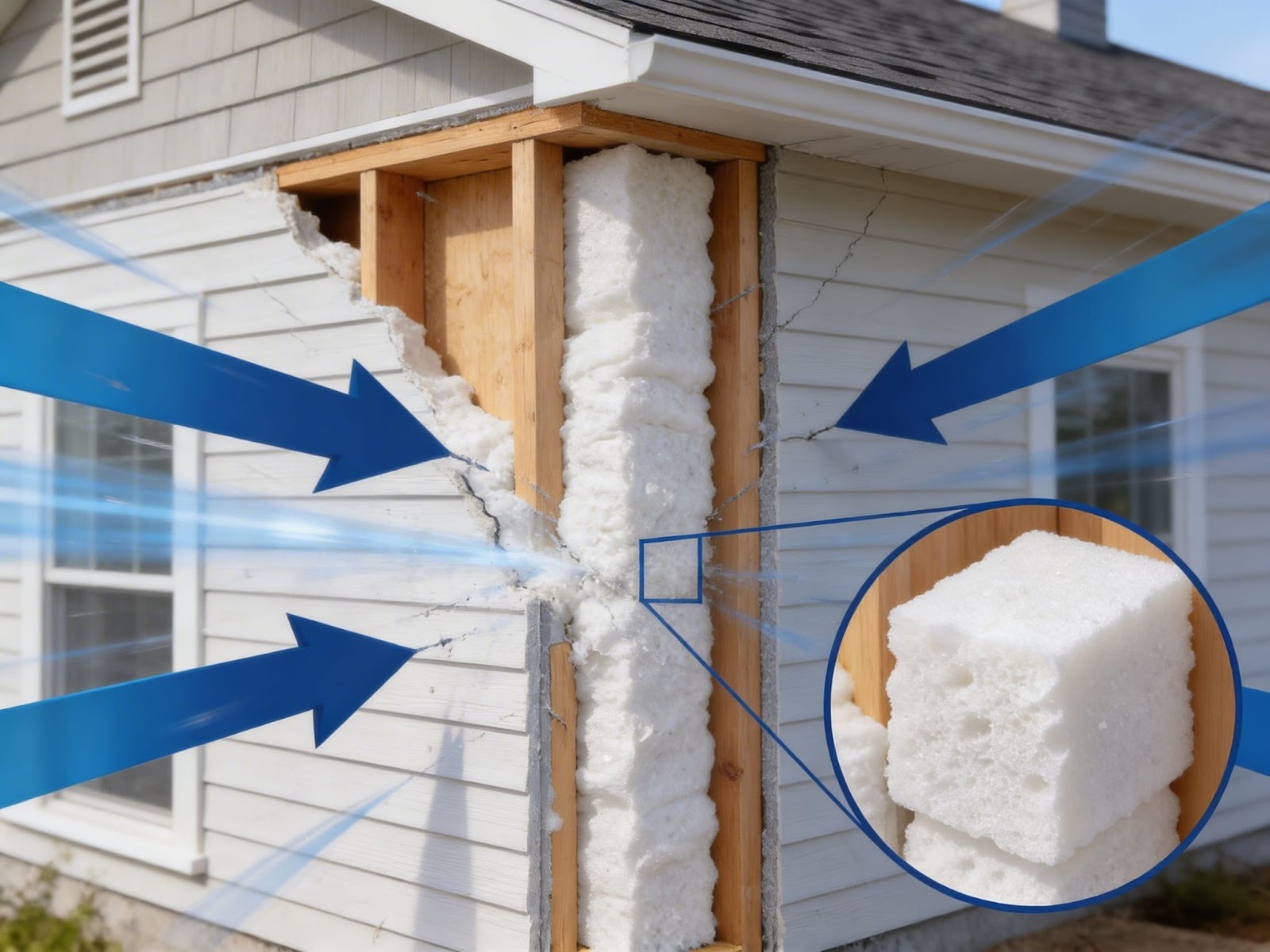
During a high-wind event, your home is subjected to severe racking or lateral forces. Wind pushing against the side of your home tries to tilt the walls, turning the rectangular wall sections into parallelograms. Complete hurricane proofing with spray foam requires a structure that can resist these powerful lateral loads to prevent the frame from detaching from the foundation.
Increasing Racking and Shear Strength via Hurricane Proofing with Spray Foam
When you use closed-cell foam for structural reinforcement, the material hardens into a dense and rigid solid. When injected into or sprayed onto wall cavities, it fills the space completely and bonds everything together. In essence, the foam acts as thousands of tiny internal diagonal braces, making the entire building significantly more rigid and far less likely to sway or fail during 120 mph winds.
Enhancing Long Term Structural Integrity and Hurricane Proofing with Spray Foam
The benefits of this type of structural upgrade are permanent. The foam prevents the wood framing from warping or shifting due to extreme Southern humidity. For those looking to upgrade older homes, our vacuum insulation removal service can efficiently clear out old settled batts to make room for high-performance hurricane proofing with spray foam.
Secure Your Home with Spray Foam Worx
Don't wait for a named storm to consider the integrity of your roof and walls. Investing in structural hurricane proofing with spray foam protects your property and your family from catastrophic loss while permanently slashing your energy costs.
📞 Call Spray Foam Worx Today +1-318-235-8116
FAQ
Q1: Does spray foam increase wind load?
Actually the opposite is true because hurricane proofing with spray foam creates a much stronger bond between your roof deck and the rafters. This process significantly increases wind uplift resistance meaning your roof is much less likely to be blown off during a high wind event. By acting as a structural adhesive it reinforces the building envelope rather than just adding weight.
Q2: What are the negatives of spray foam?
The primary drawback is a higher initial investment compared to traditional fiberglass or cellulose. Additionally hurricane proofing with spray foam requires a professional installation to ensure the chemicals are mixed at the correct 1:1 ratio. If installed by uncertified contractors there is a risk of lingering odors or improper curing which is why choosing an expert team like Spray Foam Worx is essential for a safe and permanent result.
Q3: Why are people removing spray foam?
In most cases people are removing spray foam because it was poorly installed by an amateur or a previous homeowner used it to hide existing roof leaks. When moisture is trapped against wood without a proper seal it can cause issues over time. At Spray Foam Worx we often perform vacuum insulation removal for old contaminated materials to clear the way for professional hurricane proofing with spray foam that is done correctly from the start.
Q4: Can mold grow under spray foam?
Mold requires moisture and organic food sources to grow. When you invest in hurricane proofing with spray foam using closed cell material you are creating an airtight and watertight barrier that prevents humid air from reaching the wood. If there is an active roof leak that goes unaddressed moisture can get trapped but a professional application by our team ensures the substrate is dry and the seal is perfect to prevent future mold growth.
Q5: How thick can spray foam be applied?
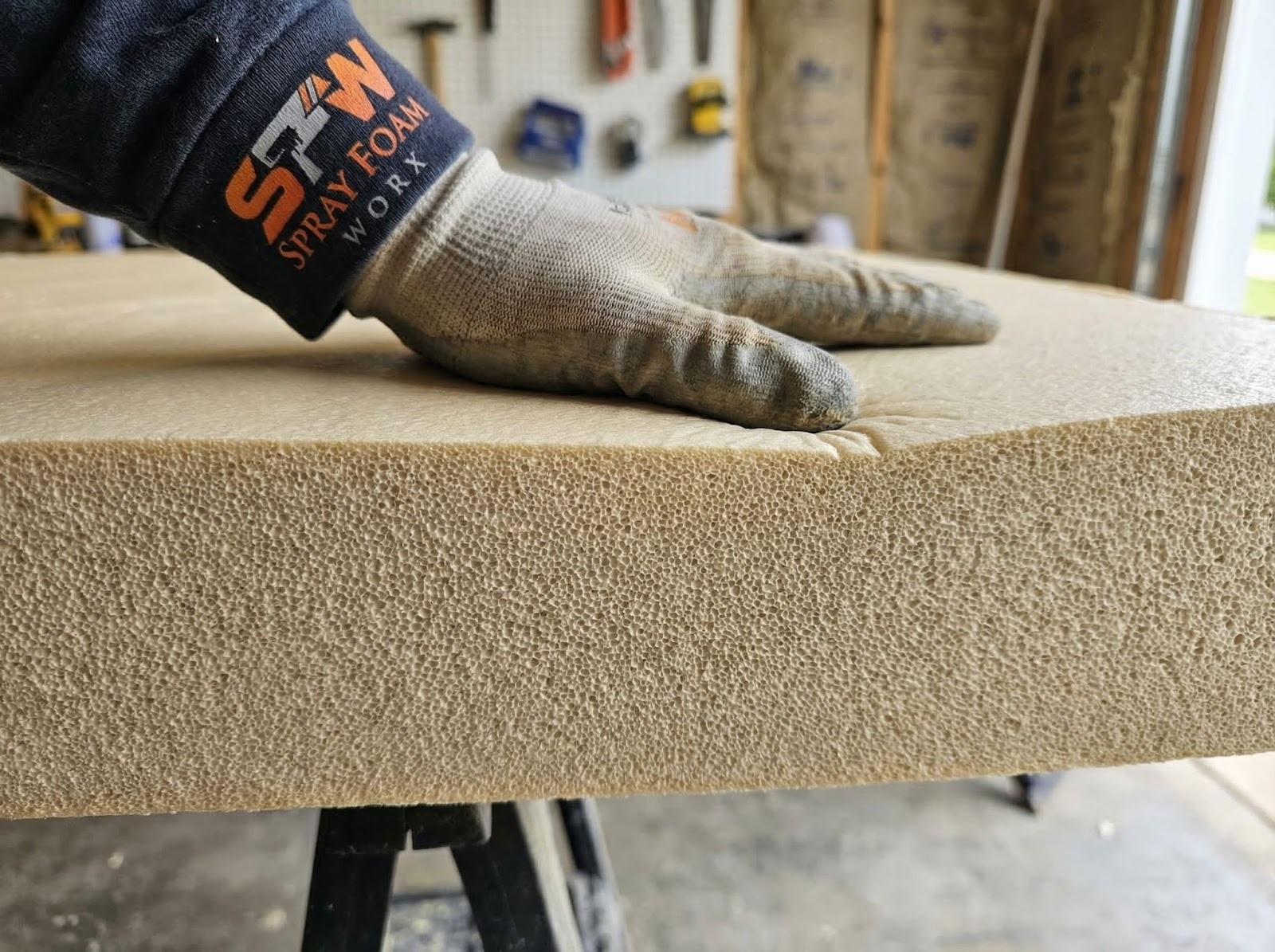
The thickness depends on the specific goals of the project and the local building codes for 2026. For effective hurricane proofing with spray foam we typically apply closed cell foam at a thickness of 2 to 3 inches to achieve maximum structural reinforcement and R-value. Open cell foam is usually applied thicker often between 5 and 10 inches to provide a total air seal for the attic space.